Why Dry Flowers at Home
How to dry flowers at home: the four working methods are air drying (hang upside down in a dark, dry room for 2-3 weeks), silica gel (bury blooms in desiccant for 2-7 days), pressing (flatten between absorbent paper and books for 2-4 weeks), and microwave with silica (1-3 minutes in 30-second bursts). Air drying is the easiest universal method; silica gel preserves colour and shape best.
Home drying is also significantly cheaper than buying commercial dried bouquets. A $60 fresh bouquet becomes a $60 dried arrangement; commercial dried equivalents often run $150-300.
The trade-off is patience. Most home drying takes 2-4 weeks and the results are less uniform than commercial drying. For sentiment, this is usually fine; for high-end display, commercial dried may still be the better choice.
Looking for the right words? Our card messages and wishes give you lines you can copy straight onto the card.

Method 1: Air Drying
Air drying is the most universal method - it works for most flowers and requires no equipment beyond string and a dark dry space.
- Tie stems in small bunches (3-6 stems each) with string or rubber bands
- Hang upside down in a dark, dry, well-ventilated space (closet, attic, basement)
- Wait 2-4 weeks until petals feel papery and stems snap rather than bend
- Avoid humid rooms (bathrooms) and direct sunlight (fades colour)
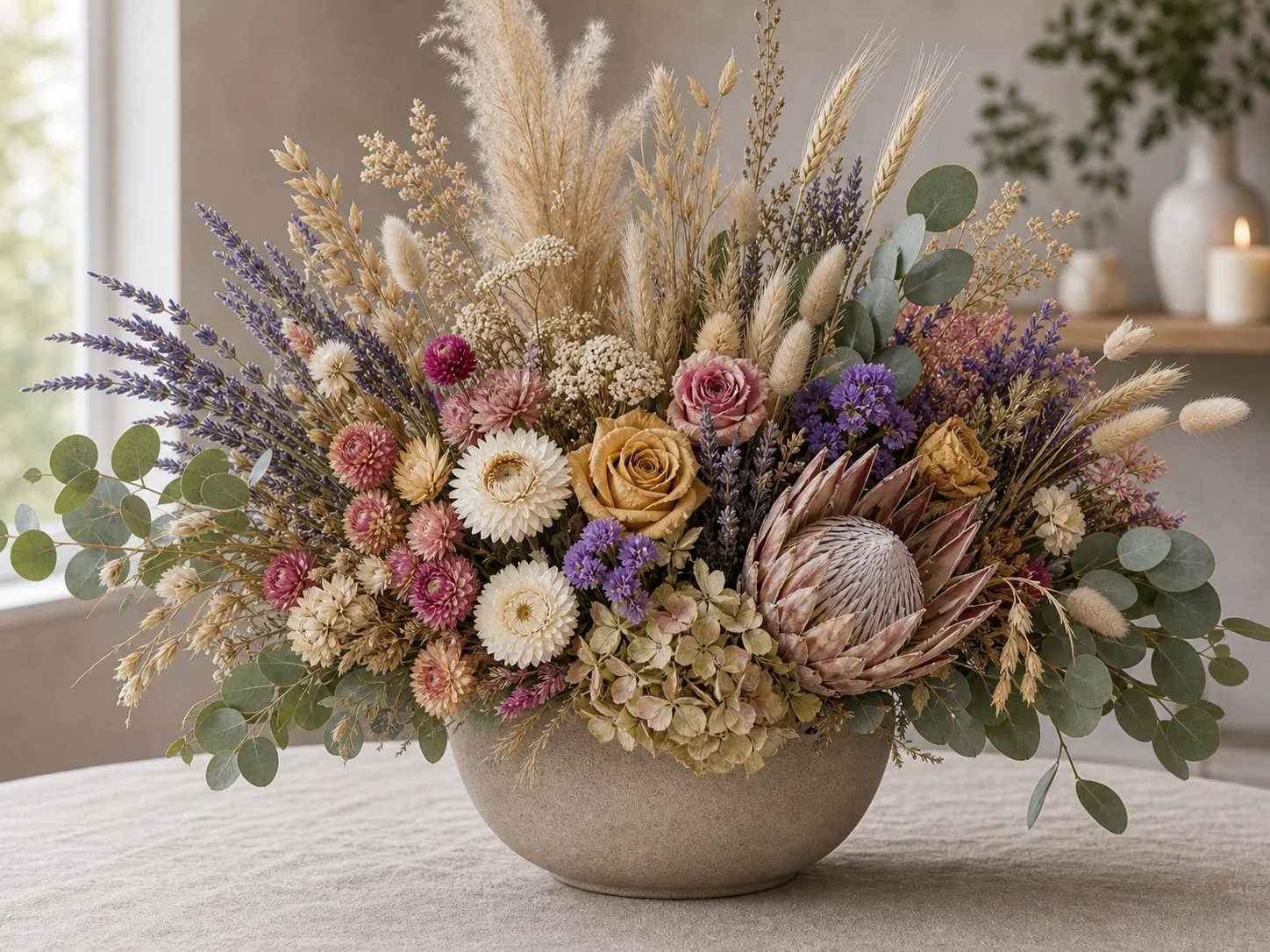
Best flowers for air drying: roses (whole stems or just petals), lavender, statice, strawflowers, baby's breath, hydrangeas, eucalyptus, wheat, lavender, yarrow, larkspur.
Avoid air drying for: tulips, daffodils, peonies (they shrivel unattractively), most thick-petalled tropical flowers.

Method 2: Silica Gel
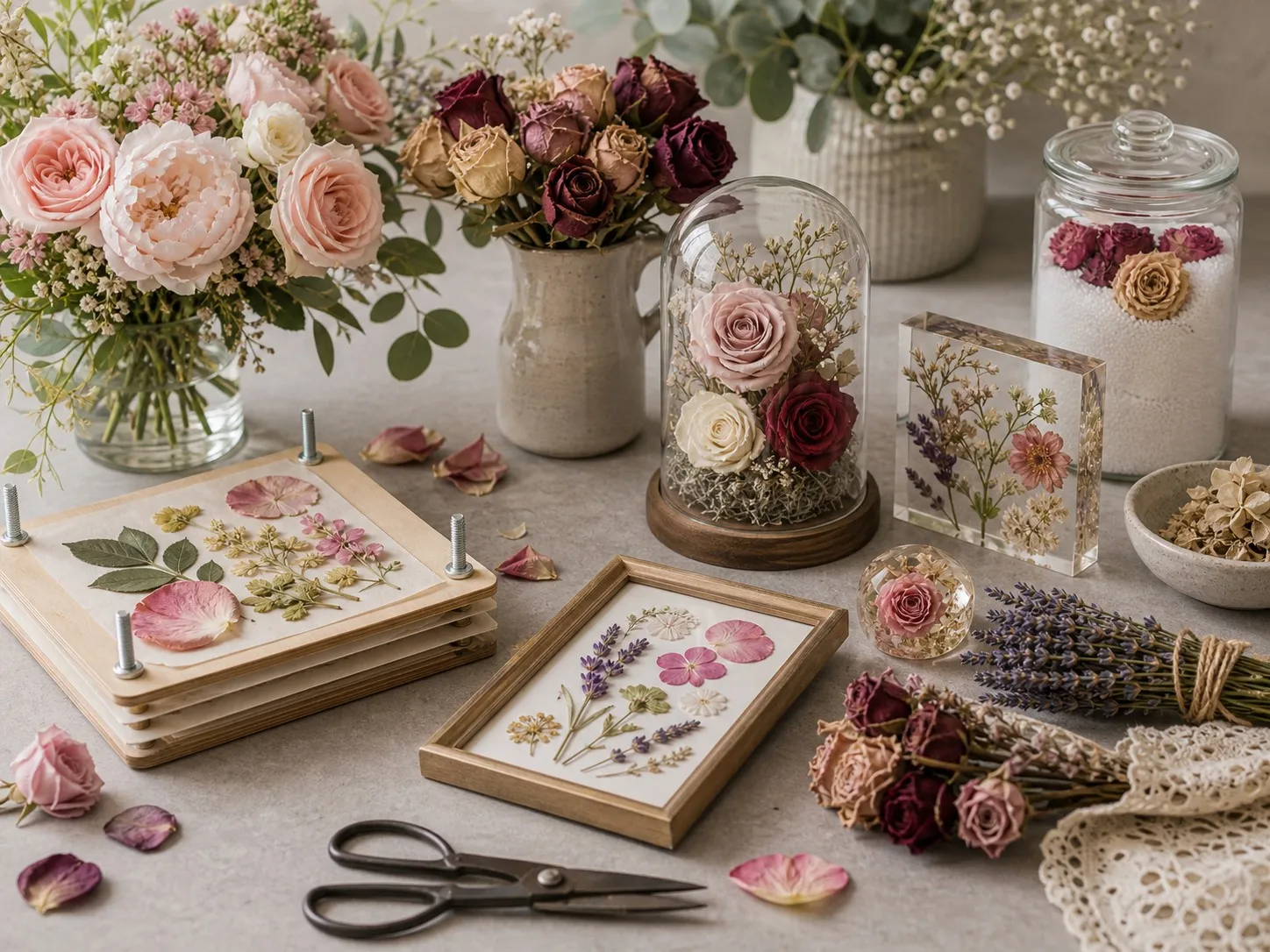
Silica gel is the small bead desiccant found in shoeboxes and electronics packaging. Used in bulk, it preserves flower shape and colour exceptionally well.
- Buy silica gel from a craft store ($15-25 for a bag that handles 20+ flowers)
- Pour 1-2 inches into an airtight container
- Cut stems short (1-2 inches), place flowers face-up on the silica
- Gently sprinkle more silica over and around the flowers until fully covered
- Seal the container and wait 2-7 days depending on flower thickness
- Carefully remove and brush off remaining silica with a soft brush
Best flowers for silica: roses (closest to fresh-looking when done), dahlias, daisies, zinnias, pansies, peonies, marigolds.
Silica gel is reusable - dry it in a 200°F oven for 2 hours after use to restore the desiccant.
Method 3: Pressing
Pressing produces flat dried flowers ideal for framing, journals, and resin art - not for vase arrangements.
- Use a flower press or two heavy books with absorbent paper (parchment or blotting paper)
- Place flowers between layers of paper; close the press or book tightly
- Leave undisturbed for 2-4 weeks
- Replace the paper every few days for thick flowers to absorb moisture faster
Best for pressing: pansies, violas, daisies, ferns, small leaves, sweet pea, larkspur, queen anne's lace.
Avoid pressing for: thick flowers (roses, dahlias, peonies). Use silica gel for those instead.
Method 4: Microwave Drying
The fastest method - dries flowers in minutes rather than weeks. Works best with silica gel inside the microwave.
- Place flowers in silica gel inside a microwave-safe container
- Microwave on medium-low (30-50% power) for 1-3 minutes in 30-second bursts
- Check between bursts - flowers can scorch easily
- Let cool fully before removing from silica
Microwave drying is fast but unforgiving. The technique requires practice and produces mixed results on first attempts. For sentimental flowers, use silica or air drying instead - microwave is best for casual experimentation.
After Drying: Display and Care
Once dried, the flowers need basic care to last:
- Keep out of direct sunlight - sun fades dried flowers fast
- Avoid humid rooms - moisture rehydrates and causes rot
- Dust gently with a soft brush or hair dryer on cool every few weeks
- Spray with unscented hairspray for extra protection (light coat from 12 inches)
- Display in a stable vase - dried flowers are fragile and cannot be repositioned easily
Expected lifespan: 1-3 years displayed indoors. Pressed flowers in a sealed frame can last decades. Silica-dried flowers in a glass dome can hold colour for years.
And when you are ready to send something, browse fresh flowers and add your note at checkout.