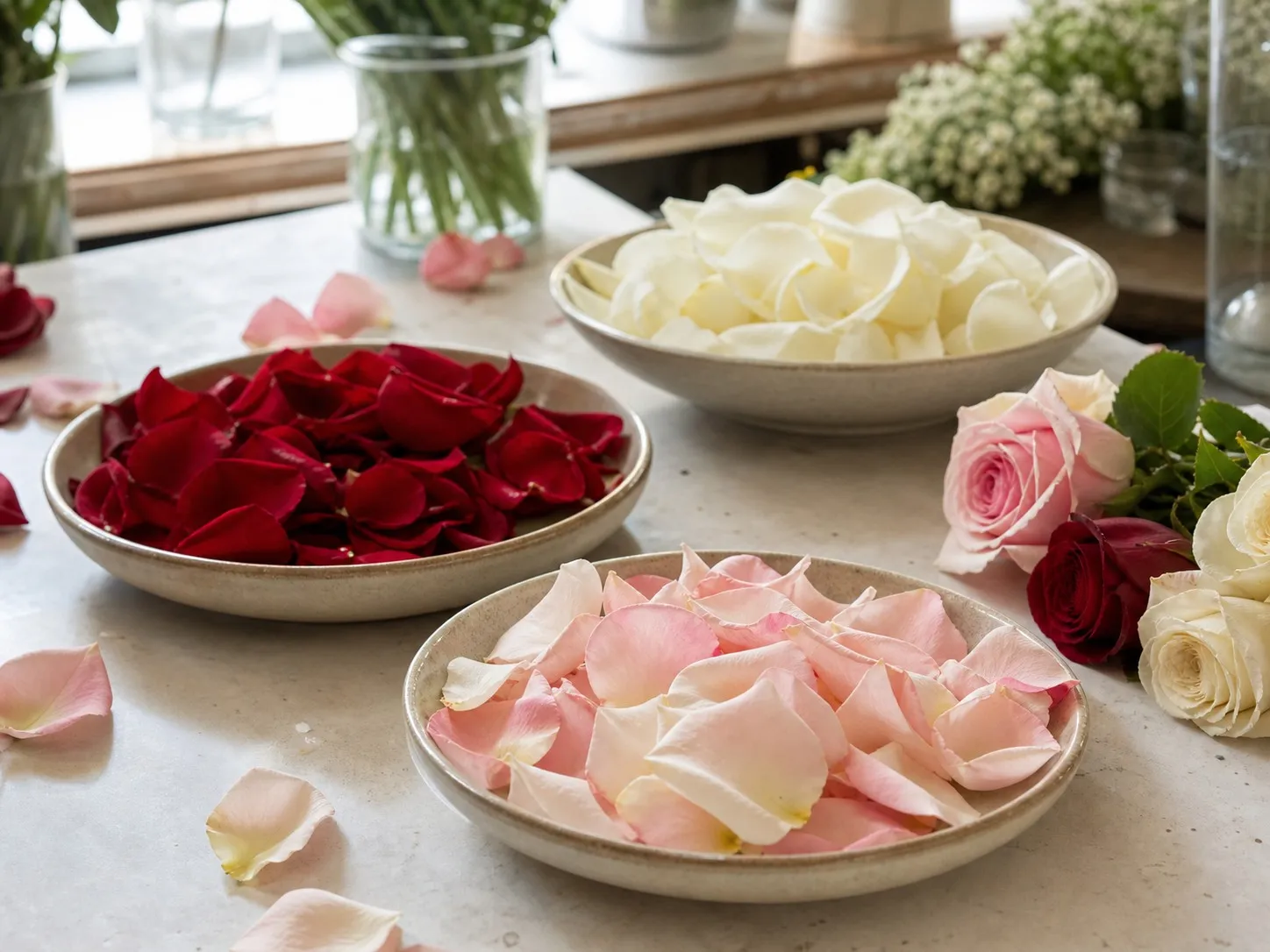
Why Dry Roses Specifically
How to dry roses: hang upside down in a dark, dry room for 2-3 weeks (air drying), bury blooms in silica gel for 2-7 days (best colour preservation), or microwave with silica for 1-3 minutes (fastest method). Start within 3-5 days of receiving the bouquet for the best dried result - waiting until petals start to drop produces brown, tired-looking dried roses.
Roses also dry well. The thick petals and sturdy stems hold their structure better than tulips, peonies, or daffodils. With either air drying or silica gel, dried roses look close to their fresh form - especially if started while the petals are still tight.
Looking for the right words? Our card messages and wishes give you lines you can copy straight onto the card.
When to Start (Crucial)
Start drying while the roses are still in good condition - tight petals, no browning at the edges. Wait too long and the dried result is brown and tired-looking.
For a wedding or proposal bouquet, start within 3-5 days of receiving the flowers. Day 2-3 is usually ideal: the roses are settled in the vase but not yet starting to drop. For long-term keepsakes (5+ years), start as early as possible.

Method 1: Air Drying
The classic method. Works for most roses with minimal equipment:
- Remove leaves below the bloom (they shrivel unattractively when dried)
- Tie 3-6 roses in a bunch with string or a rubber band, stems together
- Hang upside down in a dark, dry, well-ventilated room
- Wait 2-3 weeks until petals feel papery and stems snap rather than bend
- Avoid humid rooms (bathrooms) and direct sunlight (fades colour)
The hanging-upside-down position keeps the roses from drooping as they dry. Petals tighten slightly during drying, so a tightly cupped fresh rose becomes a still-cupped dried rose.
Expected colour change: roses darken slightly. Red becomes deeper burgundy. Pink becomes dusty rose. White becomes cream. Yellow holds best of any colour.

Method 2: Silica Gel
Silica gel produces the most lifelike results - dried roses that look close to fresh-cut:
- Buy silica gel from a craft store ($15-25)
- Cut stems to 1-2 inches (silica works on the bloom only)
- Pour 1-2 inches of silica into an airtight container
- Place roses face-up on the silica
- Gently sprinkle silica over and around the petals until fully covered
- Seal and wait 2-7 days depending on rose size
- Carefully remove and brush off silica with a soft brush
Silica-dried roses keep their colour and shape better than air-dried. The trade-off is no stem - silica only works on the bloom, so the result is a head-only flower for display in a dome, frame, or shallow dish.
Method 3: Microwave + Silica
The fast method - dries roses in minutes rather than weeks:
- Place a rose in silica gel inside a microwave-safe container
- Microwave on medium-low (30-50% power) for 1-3 minutes in 30-second bursts
- Check between bursts - petals can scorch easily
- Let cool fully (1-2 hours) before removing from silica
Microwave drying is unforgiving. For sentimental roses, stick to air drying or regular silica - the slower methods are more reliable.
After Drying: Display Ideas
Dried roses have several display options:
- Glass vase or jar - simple and classic; works for stemmed air-dried roses
- Shadow box / framed display - good for silica-dried blooms with no stems
- Glass dome - for a single dried rose on a base; very Beauty-and-the-Beast
- Resin paperweight or jewelry - for pressed or silica-dried petals
- Loose petals in a bowl or sachet - for petals that fall off naturally
- Pressed in a framed art piece - for very long-term keepsakes
Whatever the display, keep dried roses out of direct sunlight (fades colour) and away from humid rooms (rehydrates and causes rot).
And when you are ready to send something, browse fresh flowers and add your note at checkout.