What Preserved Flowers Are
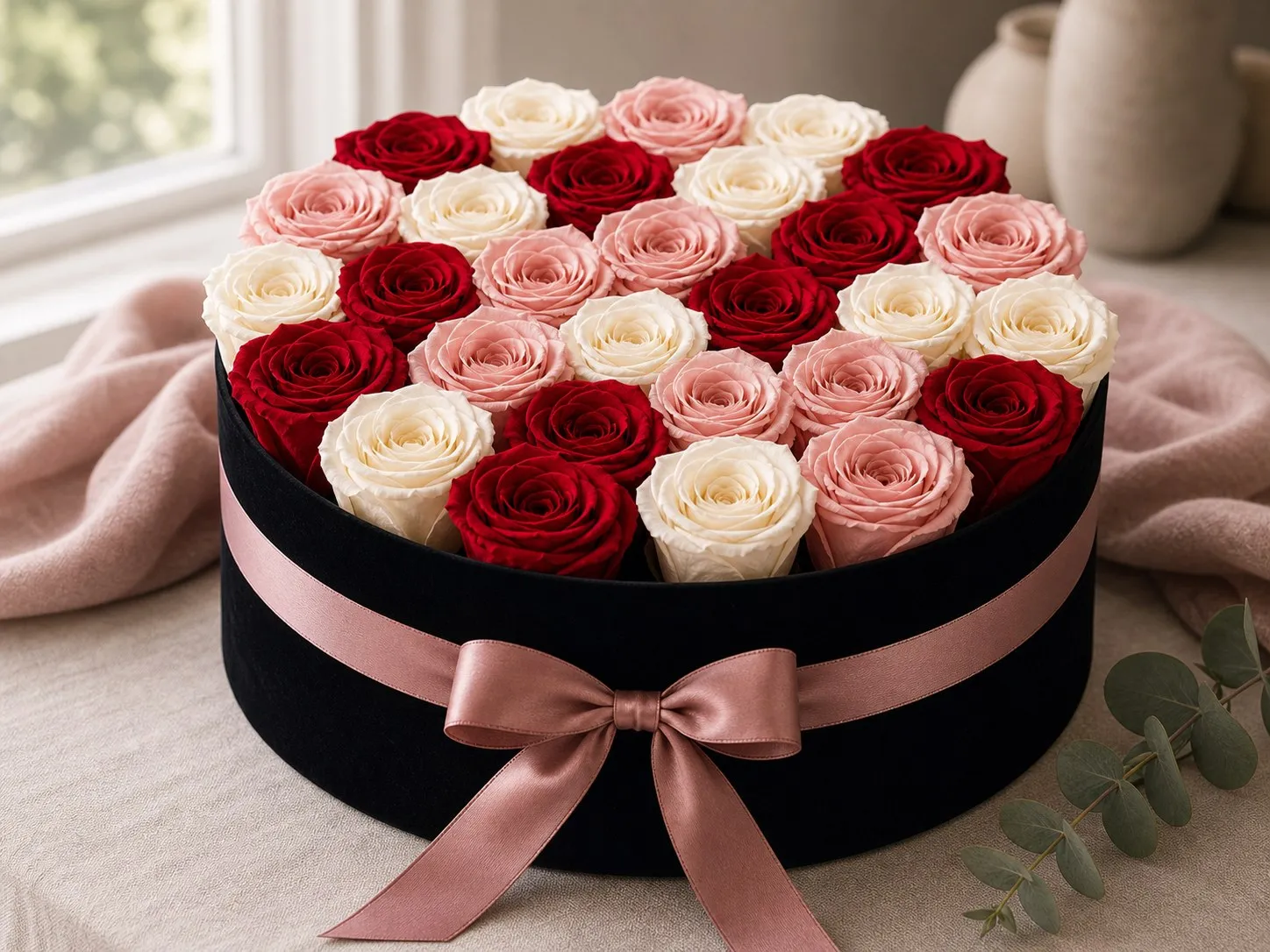
Preserved flowers are real flowers chemically treated with a glycerin-based solution that replaces the natural sap, keeping the petals soft and fresh-looking for 1-3 years without water. They look essentially identical to fresh flowers but require no maintenance. Preserved is the middle category between fresh (7-10 days, natural texture) and dried (1-3 years, papery texture).
Most preserved flowers in the Canadian market are roses, hydrangeas, eucalyptus, and certain greenery. The technique works best on flowers with thick, sturdy petals. Delicate varieties (tulips, sweet pea, peony) do not preserve well and are rarely offered.
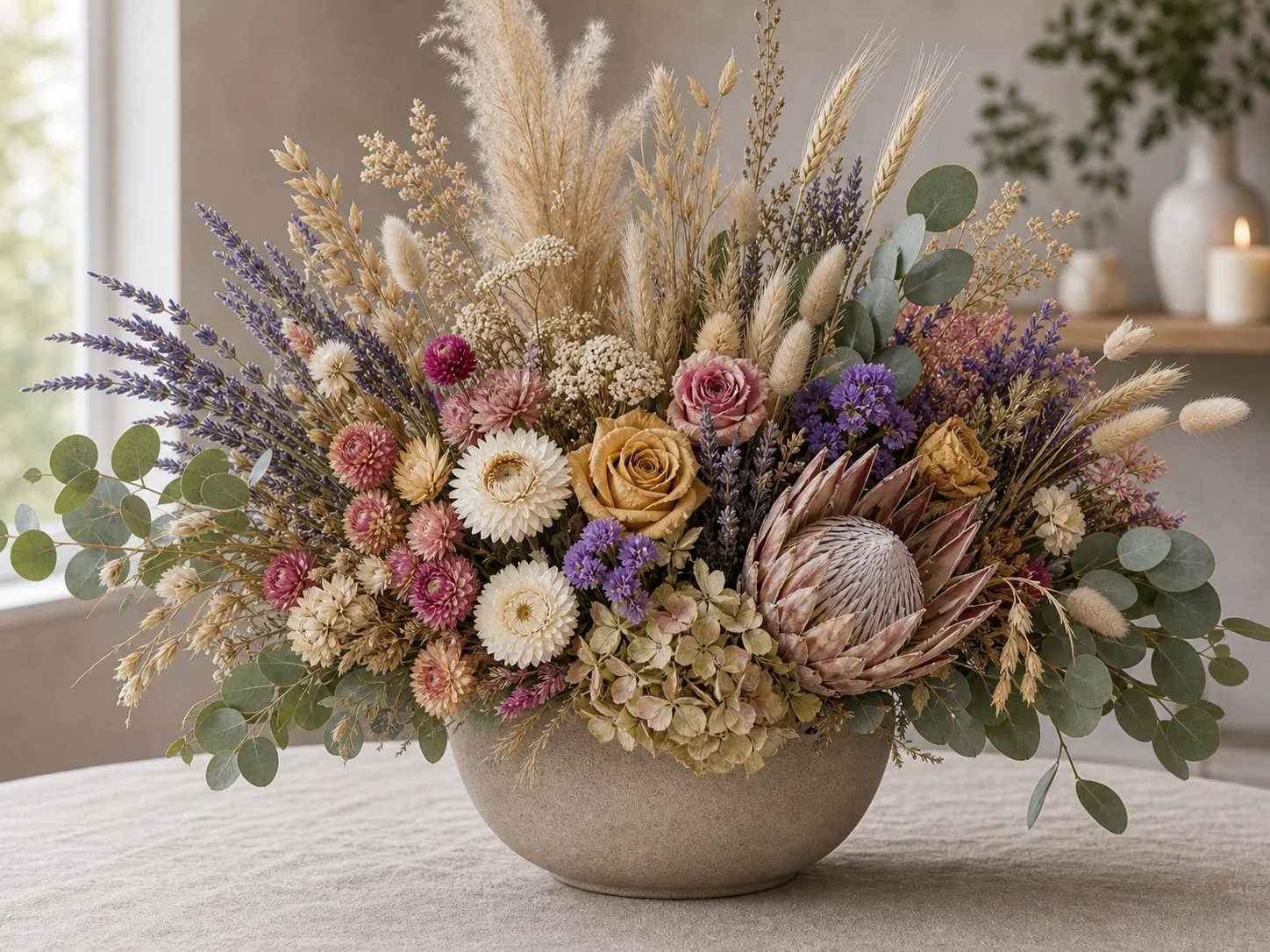
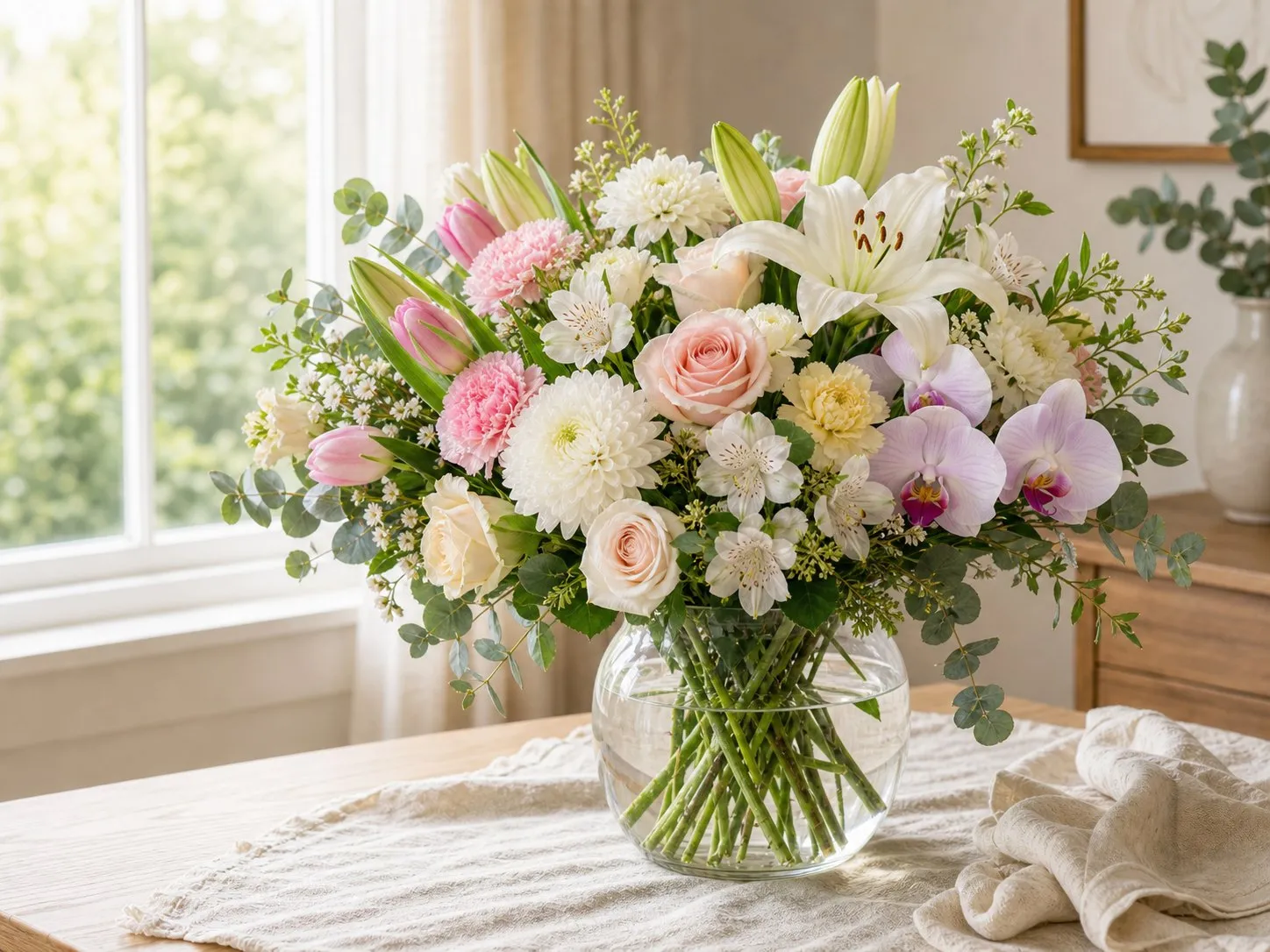
Preserved is the middle category between fresh and dried. Fresh: 7-10 days, natural texture, full hydration. Preserved: 1-3 years, soft texture, treated. Dried: 1-3 years, papery texture, fully dehydrated.
Looking for the right words? Our card messages and wishes give you lines you can copy straight onto the card.

Preserved vs Dried vs Fresh
Three categories, three different experiences:
- Fresh - lifelike colour, natural texture, fragrance; lasts 7-10 days; needs water and care
- Preserved - looks like fresh, soft texture, no fragrance; lasts 1-3 years; no maintenance
- Dried - papery texture, faded colour, often modern aesthetic; lasts 1-3 years; no maintenance
Preserved is the upgrade most people are looking for when they say "I wish flowers lasted longer." The trade-off is cost (significantly higher than fresh) and the slight texture difference (the petals feel waxy rather than crisp).
How Preservation Works
The technique is a glycerin substitution process. Freshly cut flowers are placed stem-down in a solution of glycerin and water. The plant's vascular system draws the solution up through the stem, replacing the natural sap throughout the flower.
Glycerin is hygroscopic - it holds moisture in its molecular structure - which keeps the petals soft and flexible even though the flower is technically no longer alive. The process takes about 1-3 weeks depending on the flower size.
Some preserved flowers are also dyed during the process, which is why they come in colours that do not exist in nature (electric blue, neon pink, gold, rainbow). This is purely cosmetic and does not affect lifespan.
Common Preserved Flower Types
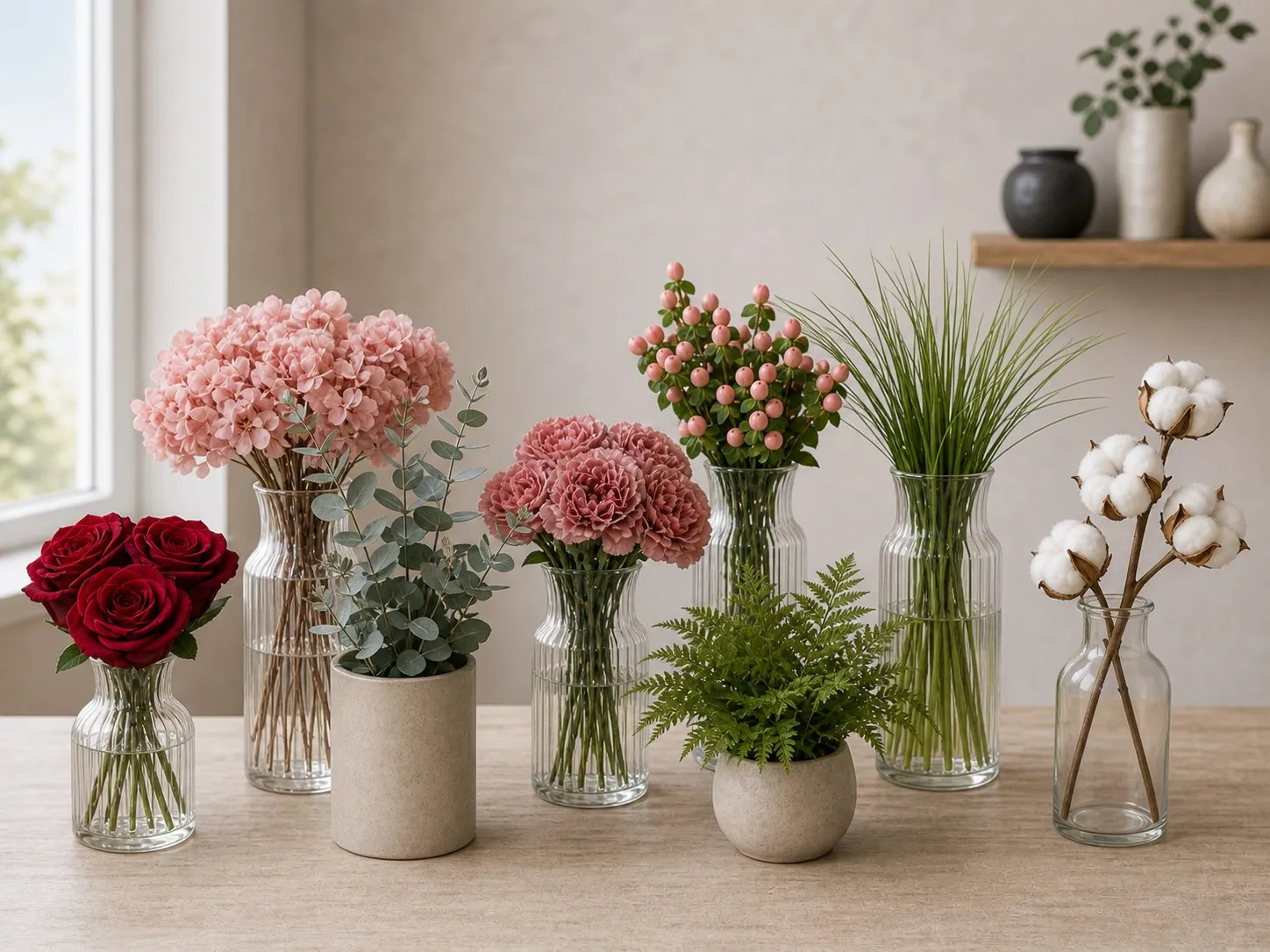
The flowers that preserve well and are commonly available:
- Roses - the volume leader; available in every preserved colour
- Hydrangeas - large preserved heads; popular for centrepieces
- Eucalyptus - silvery green; standard preserved foliage
- Carnations - sturdy enough to preserve well
- Hypericum berries - small red, yellow, or green berries
- Lily grass and ferns - structural elements
- Cotton stems - architectural and modern
Flowers that do not preserve well: tulips, sweet pea, peony, ranunculus, freesia, and most delicate spring flowers. The petals are too thin and break down during preservation.
When to Choose Preserved
Preserved flowers fit specific gift profiles:
- Long-distance gifts - no time pressure on delivery
- Sustained romantic gestures - 1-3 years of display vs 10 days
- Wedding work - bouquet preservation for keepsakes
- Modern home decor - display pieces for shelves and centrepieces
- Gifts for people who travel constantly
- Recipients who explicitly do not enjoy fresh flower maintenance
- Memorial keepsakes - preserved bouquets from significant events
Skip preserved for: traditional family gifting (fresh is still the cultural expectation), funerals (fresh is standard), Valentine's Day (fresh red roses are non-negotiable), recipients who specifically value the freshness and fragrance of cut flowers.
How to Care for Preserved Flowers
Preserved flowers are essentially maintenance-free, but lifespan depends on display conditions:
- Keep out of direct sunlight - sun fades colour fast
- Avoid humid rooms - high humidity rehydrates the glycerin and softens the form
- Do not water - preserved flowers cannot drink and water causes mold
- Avoid heating vents - dries the glycerin and stiffens the petals
- Dust gently with a soft brush or cool hair dryer
- Do not handle petals more than necessary - the treated surface is delicate
In good conditions, preserved roses last 18 months to 3 years. Premium varieties displayed under glass domes can hold their look for the full 3 years; arrangements in open vases in normal indoor conditions typically show wear after 12-18 months.
And when you are ready to send something, browse fresh flowers and add your note at checkout.