Why Preserve Flowers
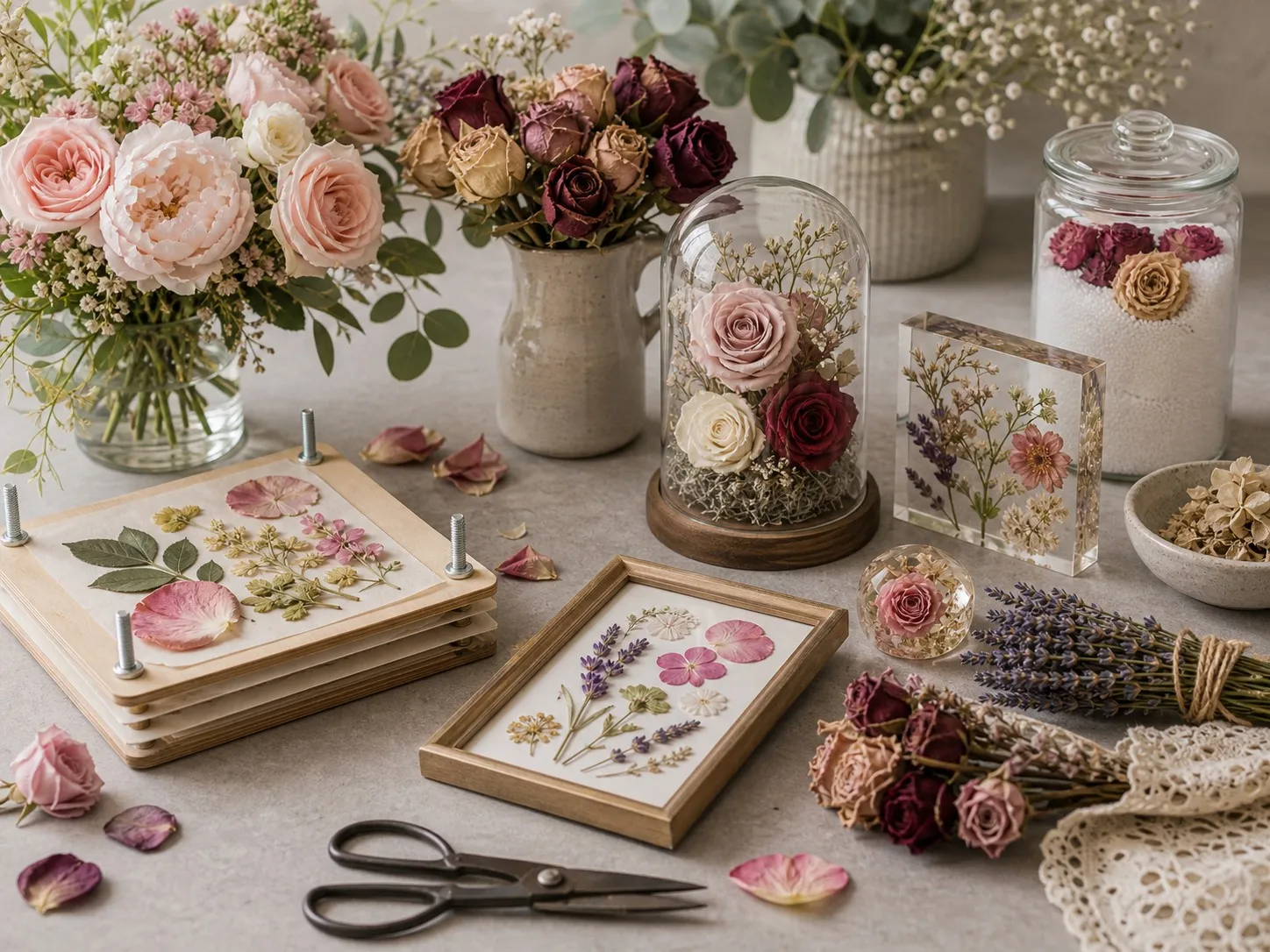
Flower preservation includes six main methods: air drying (free, 1-3 year lifespan), pressing (cheap, decades lifespan in sealed frames), silica gel (moderate cost, 2-5 years, lifelike shape), glycerin substitution (moderate cost, 1-3 years, soft fresh feel), freeze-drying ($200-700 professional, 5-10+ years, most lifelike), and resin embedding (permanent keepsake). DIY suits sentimental personal use; professional freeze-drying suits wedding bouquets.
It is also a hobby and craft - flower pressing, resin jewelry, dried flower art. The methods overlap with sentimental preservation but the goals are different.
Looking for the right words? Our card messages and wishes give you lines you can copy straight onto the card.
The Six Main Preservation Methods
Each method produces a different result:
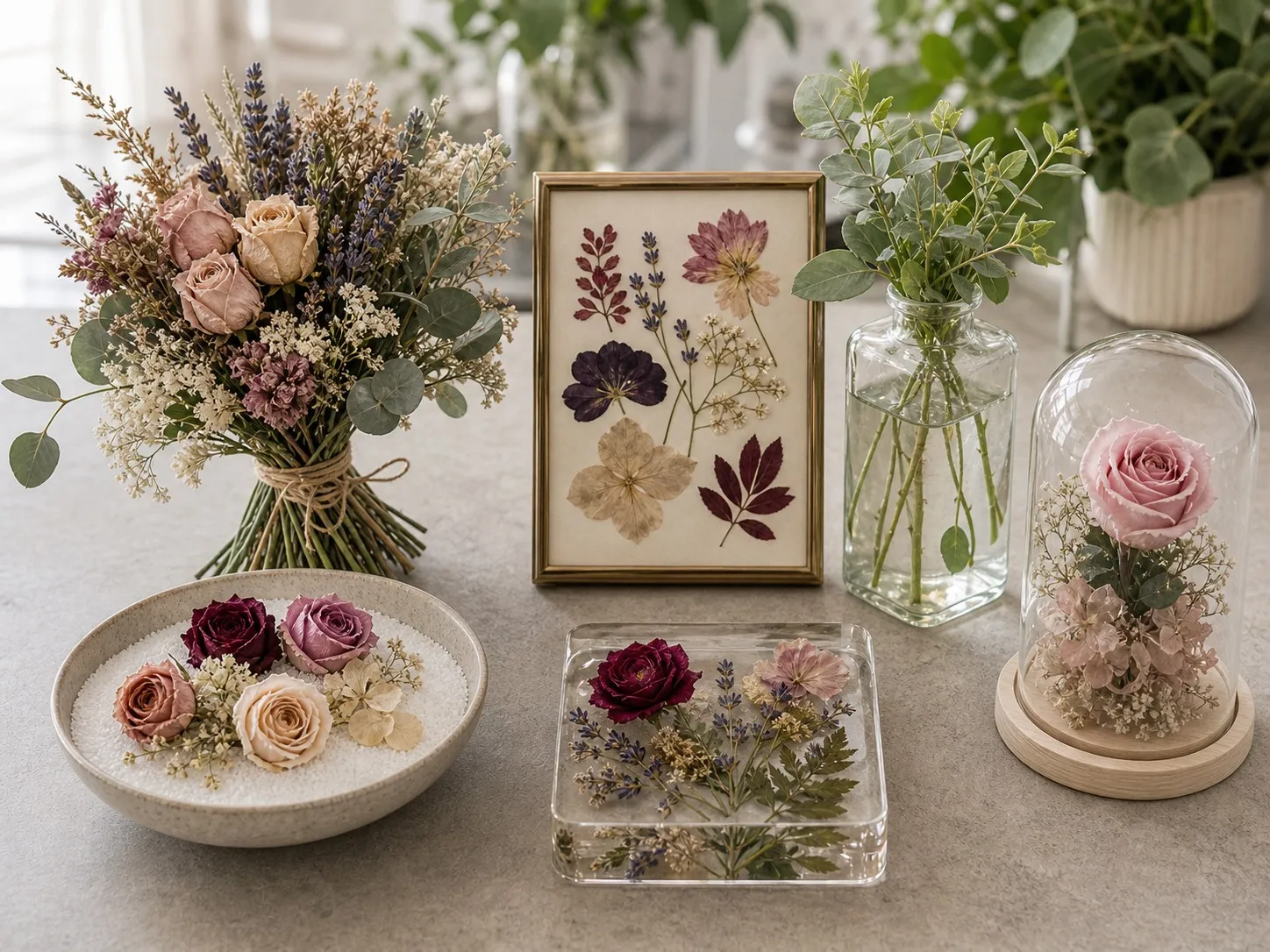
- Air drying - hang upside down for 2-3 weeks; rustic look, papery texture; free at home
- Pressing - flatten between books for 2-4 weeks; flat 2D result; great for frames and resin
- Silica gel - bury in desiccant for 2-7 days; preserves colour and 3D shape exceptionally well; $15-30 DIY
- Glycerin substitution - replace plant sap with glycerin over 1-3 weeks; keeps soft fresh-looking texture; $20-50 DIY
- Freeze-drying - professional process; preserves full lifelike shape and colour; $200-700 commercial
- Resin embedding - encase pressed or silica-dried flowers in clear resin; permanent keepsake; $30-150 DIY
When to DIY vs Hire Professional
The decision depends on the bouquet and the result you want:
- DIY suits - sentimental personal bouquets, low-budget keepsakes, casual home displays, anniversary roses, single significant flowers
- Professional suits - wedding bouquets (especially full bridal bouquets), high-value sentimental flowers, archival-quality keepsakes
Wedding bouquet preservation is the most common professional preservation service in Canada. Pricing ranges $200-500 for a full bridal bouquet professionally freeze-dried and displayed in a shadow box or under a glass dome.
Method Comparison
The trade-offs by method:
- Air drying - cheap, easy, papery; vase or hanging display; 1-3 years
- Pressing - cheap, flat result; framed art or journal; decades if sealed
- Silica - moderate cost, lifelike shape; dome or shadow box; 2-5 years
- Glycerin - moderate cost, soft feel; vase display; 1-3 years
- Freeze-drying - expensive, full shape and colour; usually professionally done; 5-10+ years
- Resin - moderate cost (DIY) or expensive (professional); permanent; jewelry, paperweights
Best Method by Flower Type
Some flowers preserve better with specific methods:
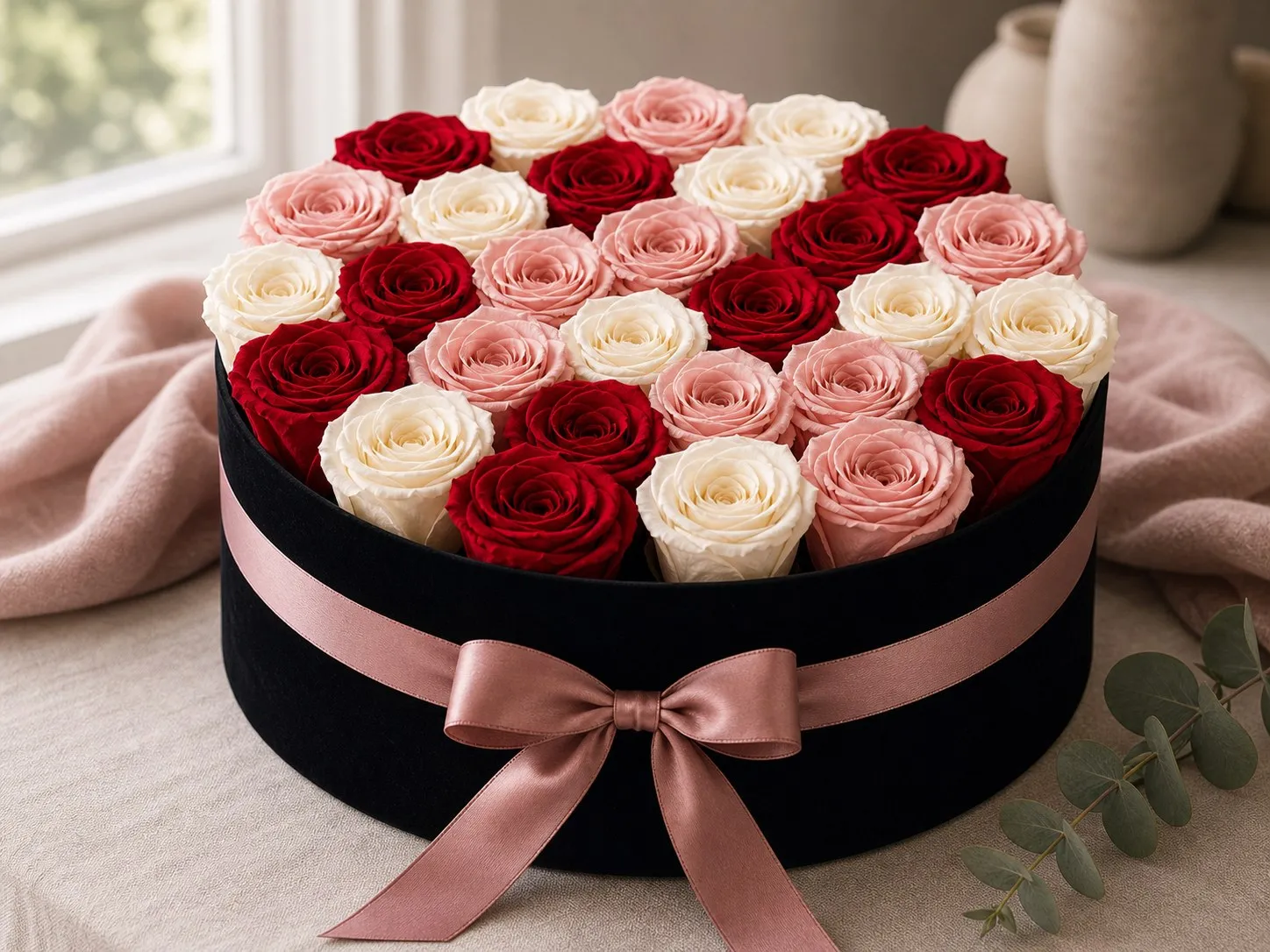
- Roses - air dry (classic), silica (lifelike), or freeze-dry (best for weddings)
- Peonies - silica gel (the only DIY method that works); freeze-dry professionally
- Tulips - difficult; freeze-dry professionally or skip preservation
- Daisies, cosmos, pansies - pressing (their thin petals suit this method)
- Hydrangeas - air dry beautifully; the dried heads hold for years
- Lavender, statice, strawflower - air dry (they look almost identical to fresh once dried)
- Sunflowers - air dry the small ones; freeze-dry the large ones professionally
- Sweet pea, lily of the valley - pressing; too delicate for most other methods

Display Ideas for Preserved Flowers
How to show preserved flowers once they are done:
- Glass dome on a wooden base - for a single special bloom
- Shadow box frame - for wedding bouquets or pressed-flower art
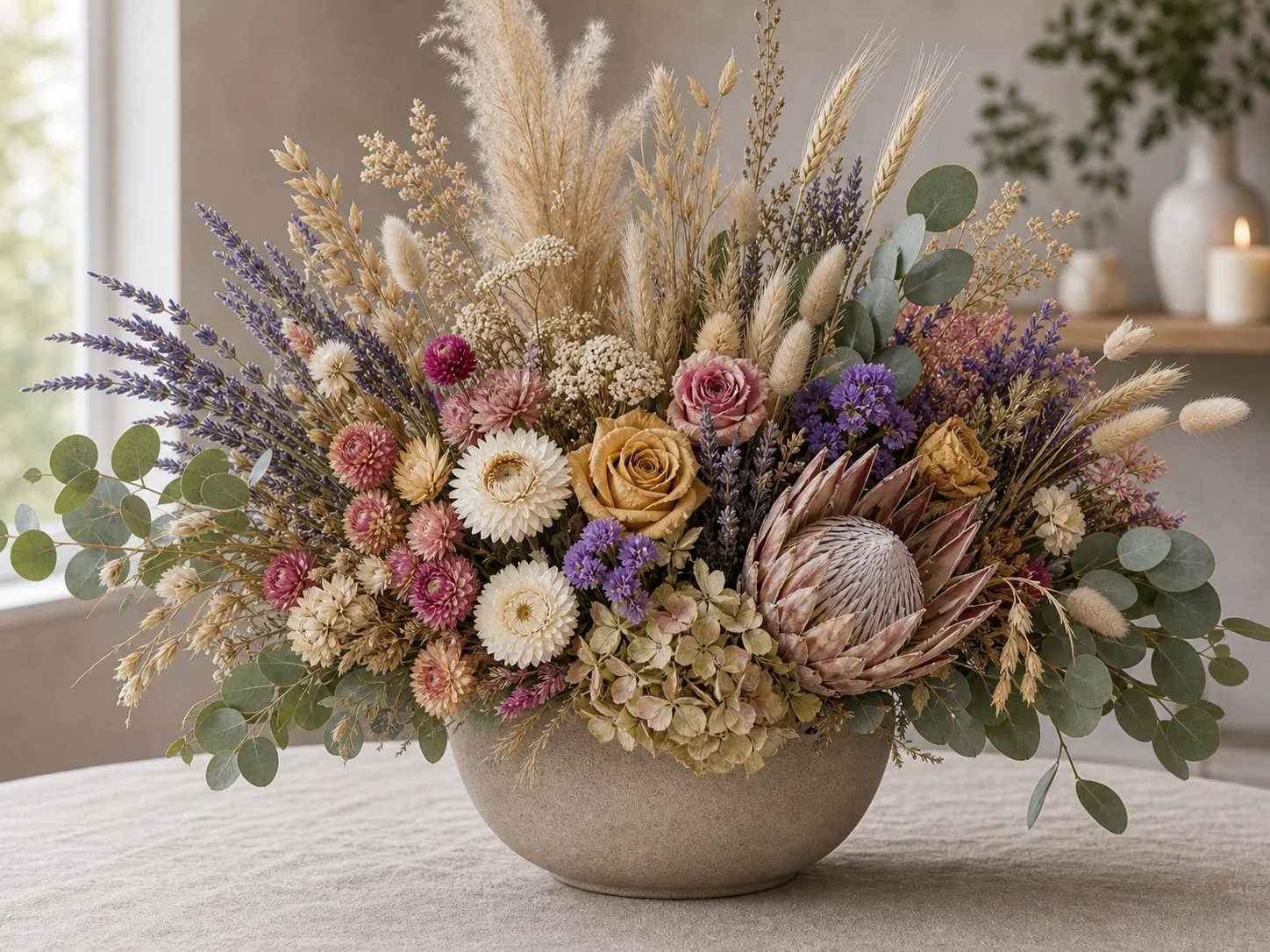
- Hand-tied dried bouquet in a vase - for air-dried roses or wildflowers
- Resin paperweight or coaster - permanent keepsake from pressed petals
- Framed art (pressed flowers) - traditional and elegant
- Wreath - for dried flowers and grasses
- Sealed glass jar - for loose dried petals or potpourri
And when you are ready to send something, browse fresh flowers and add your note at checkout.