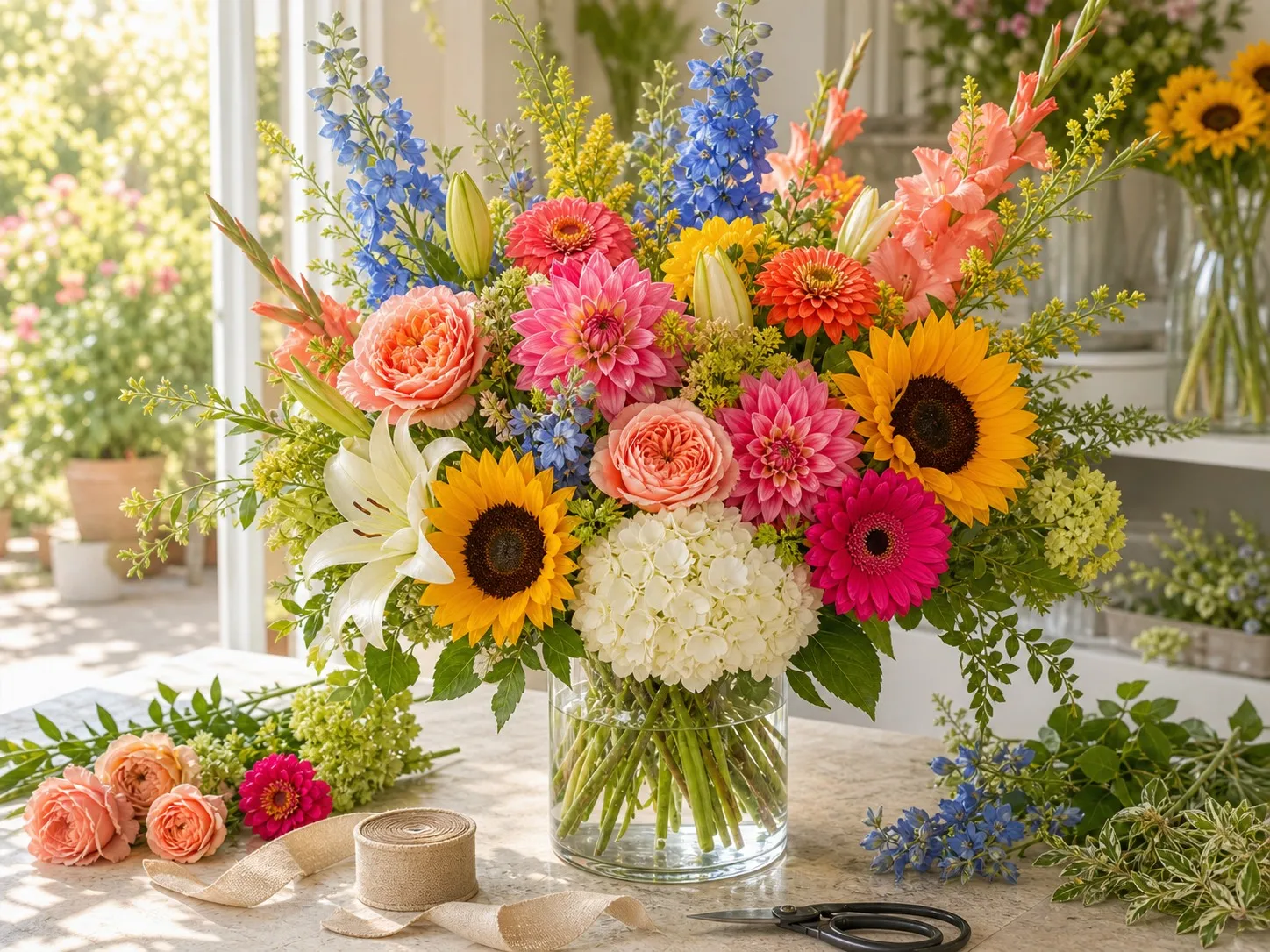
What Makes a Bouquet "Wildflower"
Wildflower bouquets are defined by style as much as by botanical origin. Most commercial "wildflower" bouquets do not actually contain wild-picked flowers - that is illegal in many provinces and parks. Instead, they use cultivated varieties that look like wildflowers and are arranged in the loose, gathered style of a hand-picked field bouquet.
The visual cues: varied stem heights (not all the same), mixed varieties (not a single type), generous greenery and grasses, asymmetrical shape, and a slight messy-on-purpose looseness. The opposite of a tight tournament rose bouquet.
The appeal is the feel. Wildflower bouquets read as relaxed, garden-fresh, and personal - the opposite of formal florist-shop bouquets. They suit hosts, casual dinner parties, friend birthdays, and recipients who prefer the natural look.
Looking for the right words? Our card messages and wishes give you lines you can copy straight onto the card.

Flowers That Read as Wildflowers
The cultivated flowers that look most like field-gathered wildflowers:
- Daisies (Shasta, gerbera) - the classic wildflower look
- Cosmos - delicate, airy, very wildflower-coded
- Cornflowers (bachelor button) - the blue wildflower look
- Black-eyed Susans - yellow with dark centres; quintessential meadow flower
- Yarrow - flat-topped clusters in cream, yellow, or pink
- Queen Anne's lace - white lacy umbrellas; classic filler
- Larkspur - tall spikes; blue, white, pink
- Snapdragons - tall, structural, slightly wild
- Sweet pea - delicate and fragrant
- Wildflower mixes - florist-sourced bunches with multiple varieties
Combined with grasses (wheat, oat, ornamental) and herbs (mint, basil flowers, rosemary), these flowers build into bouquets that feel genuinely gathered rather than arranged.
Building a Wildflower Bouquet
If asking a florist for a wildflower bouquet, the words that get you the right result:
- Loose hand-tied - not a tight round dome
- Mixed varieties - 5-8 different flowers in one bouquet
- Varied heights - some stems noticeably taller than others
- Generous greenery - grasses, herbs, ornamental leaves
- Garden-style - more open and airy than commercial bouquets
- Natural twine wrap - not foil or formal paper
A good wildflower bouquet looks almost casual - the skill is in making it feel un-arranged while still being visually coherent. Local florists usually do this better than chains, which default to tighter standardized arrangements.
When Wildflower Bouquets Work
Wildflower style fits specific moments:
- Casual host gifts - reads as warm and natural
- Friend birthdays - relaxed and personal
- Summer events - matches the seasonal feeling
- Outdoor parties and picnics - blends with the setting
- Recipients who garden - speaks their visual language
- Cottage / lake-house gifting - fits the setting
- Brunch and casual dinner table arrangements
- Country and barn weddings - the standard wildflower wedding look
Skip wildflower style for: very formal occasions (corporate events, formal weddings, sympathy services), traditional romantic gestures (roses are the cultural expectation), and recipients who specifically prefer tight, structured bouquets.

Seasonal Notes
Wildflower bouquets are seasonal in a way most other bouquet styles are not. Peak season runs May through September when actual wildflower-style flowers are at their freshest. Off-season "wildflower" bouquets use imported substitutes and tend to read as styled rather than gathered.
For weddings specifically: book wildflower-style bouquets 3-6 months ahead, even more for summer dates. The look depends on having multiple varieties available at the right moment - not always possible with short notice.
And when you are ready to send something, browse fresh flowers and add your note at checkout.