Why Most Florist Flowers Have No Scent
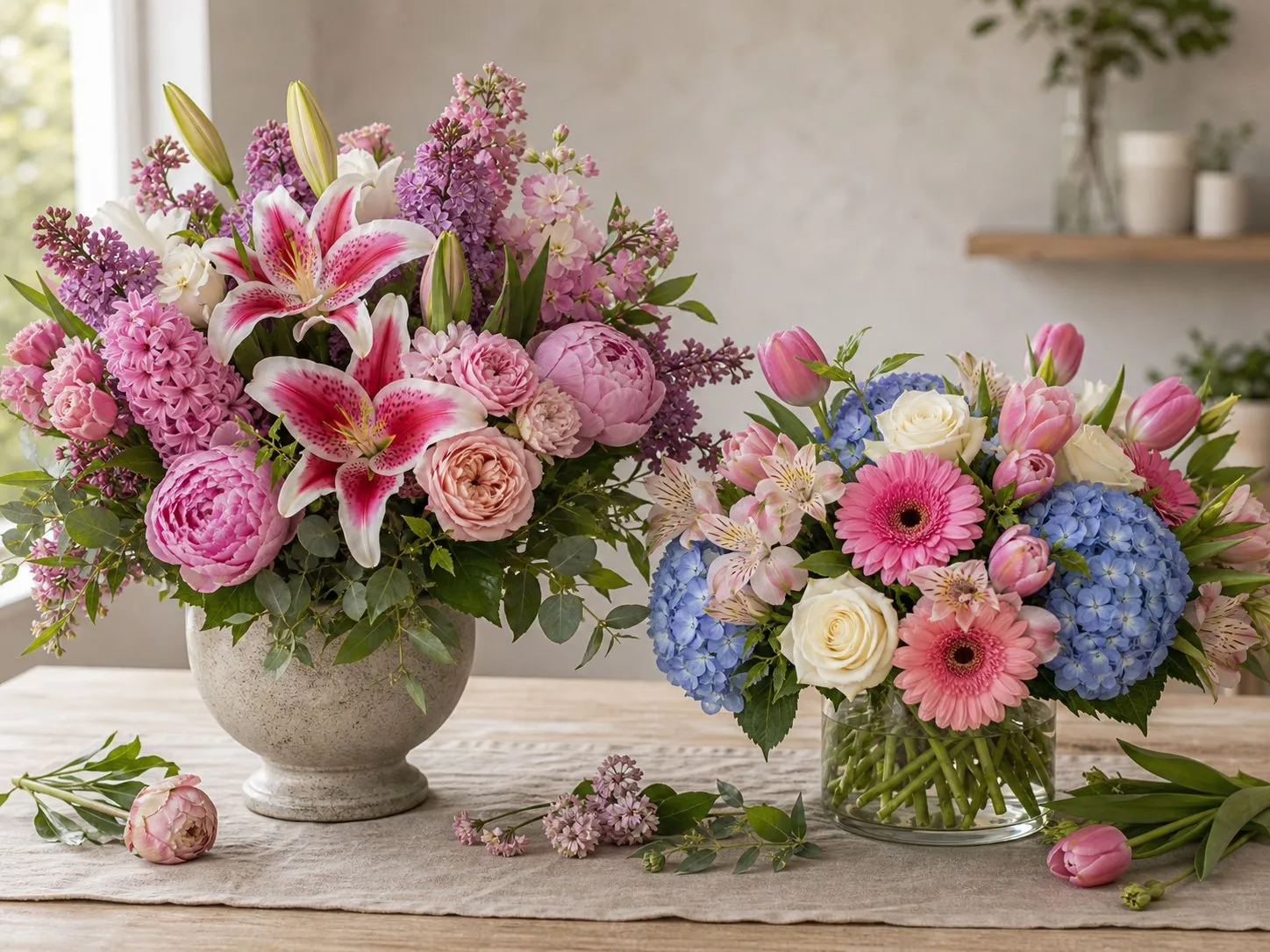
The best smelling flowers are stargazer lilies, oriental lilies (Casa Blanca, Sorbonne), gardenia, jasmine, hyacinth, freesia, lily of the valley, peonies, garden roses (David Austin varieties), sweet pea, lilac, and tuberose. Stargazer lilies and hyacinth deliver the strongest fragrance - one stem fills a room. Most florist hybrid tea roses, tulips, gerberas, and hydrangeas are essentially scentless because they were bred for visual qualities, not fragrance.
This is why a dozen red roses from a florist often smells like almost nothing. The hybrid tea varieties most florists carry are visually perfect and scentless. The exception is garden roses (David Austin), which are bred to keep their fragrance.
If fragrance matters, it is worth specifying. Florists carry the fragrant varieties; they just default to the unscented hybrids unless asked.
Looking for the right words? Our card messages and wishes give you lines you can copy straight onto the card.

Top 12 Most Fragrant Flowers
The flowers that consistently deliver real fragrance, in roughly the order of intensity:
- Stargazer lilies - intense and unmistakable; one stem fills a room
- Oriental lilies (Casa Blanca, Sorbonne) - similar to stargazer but white
- Gardenia - rich, sweet, classic; difficult to source as cut
- Jasmine - intense and night-blooming; usually as a plant
- Hyacinth - heavy spring fragrance; pastel colours
- Freesia - lighter, citrus-like; very pretty
- Lily of the valley - small, delicate, deeply fragrant; brief May window
- Peonies - medium fragrance; varies by cultivar
- Garden roses (David Austin) - the fragrant rose; varies by cultivar
- Sweet pea - delicate, sweet, brief spring window
- Lilac - heavy, fresh, instantly recognizable; brief mid-May window
- Tuberose - intense, sweet, almost overpowering; specialty
If the bouquet needs to smell strongly: stargazer lilies or hyacinth deliver. For something softer: freesia, lily of the valley, or sweet pea.
Flowers People Expect to Be Fragrant (But Are Not)
A short list of flowers commonly associated with fragrance that usually deliver almost none:
- Most florist hybrid tea roses - bred for look, not scent
- Tulips - some heritage varieties carry light scent, but most cut tulips do not
- Daffodils - mild grassy smell, not floral
- Sunflowers - earthy and slightly pungent, not pleasant fragrance
- Gerberas, mums, hydrangeas - essentially scentless
If a customer asks for "romantic red roses with fragrance," the florist should switch from hybrid teas to garden roses - that is the difference between scented and unscented.
When to Use Fragrant Flowers (and When Not)
Heavy fragrance is a real factor. The contexts where it works and where it does not:
- Good fit: home gifting, romantic occasions, large open spaces, wedding ceremonies
- Bad fit: hospital rooms (can trigger nausea), shared offices, small apartments, recipients with allergies, baby nurseries
For home arrangements, fragrance is usually a positive - the flowers do double duty as decoration and as scent. For office or hospital delivery, ask the florist for low-fragrance varieties (roses, gerberas, hydrangeas, tulips).
Seasonal Notes
Several of the most fragrant flowers are tightly seasonal in Canada:
- Hyacinth - spring (March-April)
- Lily of the valley - May only
- Sweet pea - April-May
- Lilac - mid-to-late May, briefly
- Peonies - late May through June
- Stargazer lilies - year-round through import
- Garden roses - peak summer, available year-round
- Freesia - mostly available year-round
And when you are ready to send something, browse fresh flowers and add your note at checkout.