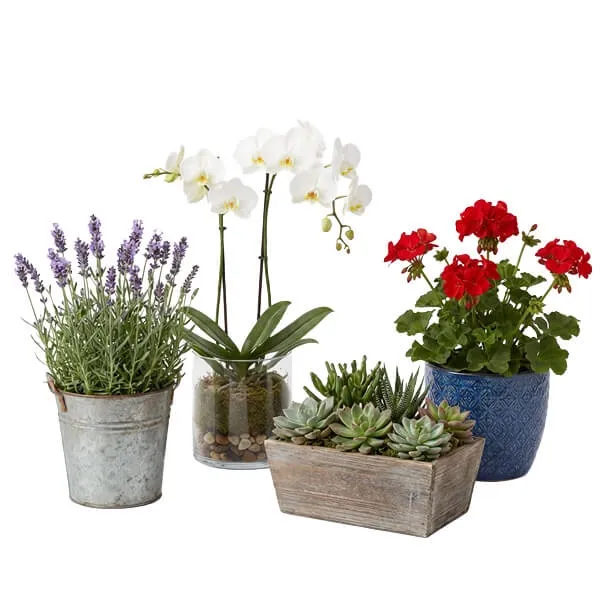
Why Orchids Get a Bad Reputation
Let me say the unpopular thing first: orchids are not hard to keep. The phalaenopsis - the moth orchid you see in every grocery store and gift shop - is one of the most forgiving houseplants you can own. It just does not behave like the plants people are used to, and that mismatch is where all the trouble starts.
People treat an orchid like a fern: pot it in soil, water it every few days, put it somewhere dim because it looks delicate. Every one of those instincts is wrong for an orchid, and following them is what turns a plant that wants to live for years into one that rots in a month. Once you understand what an orchid actually is - an air plant that grows on tree bark in dappled light - the care makes sense and gets genuinely easy.
Looking for the right words? Our card messages and wishes give you lines you can copy straight onto the card.
Orchid Care at a Glance
If you only read one part of this guide, read this table. It covers the essentials for a phalaenopsis, which is what the vast majority of people own.
| Need | What to do |
|---|---|
| Water | Once a week, roughly - only when the roots turn silvery-grey and the bark is dry |
| Light | Bright, indirect. An east window is ideal; never harsh direct midday sun |
| Temperature | Normal room temperature, 18-25C. A cooler night helps it reflower |
| Pot | Clear plastic pot with drainage holes, sitting inside a decorative cover pot |
| Mix | Bark or orchid mix - never standard potting soil |
| Feeding | Weak orchid fertiliser every 2-3 waterings while it is growing |
| Repot | Every 1-2 years, or when the bark breaks down to mush |
Notice what is not on that list: daily attention, misting, a humid bathroom, or a special window. Orchids reward a light touch and punish fuss.

Watering: The One Thing Everyone Gets Wrong
If your orchid dies, it will almost certainly be from overwatering. Orchid roots are built to sit in air and grab a drink now and then; leave them sitting in water and they suffocate and rot, and by the time the leaves go limp the roots are often already gone.
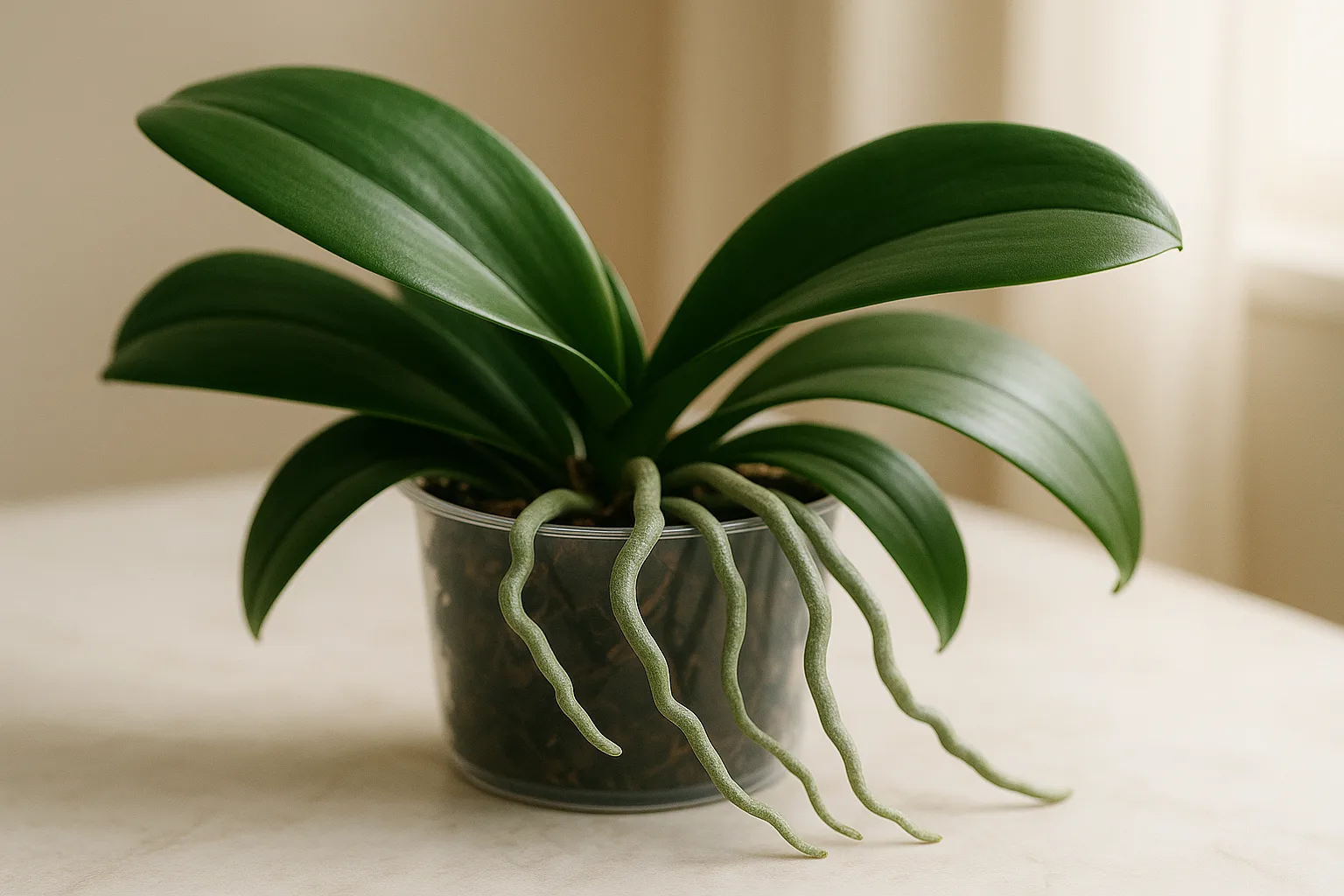
The single best trick is the clear pot the orchid came in - do not throw it away. Through it you can see the roots. Plump and green means the plant has plenty of water; silvery-grey and the bark gone dry means it is time. When in doubt, wait. An orchid tolerates being a little dry far better than being wet.
- Water in the sink: let lukewarm water run through the bark for 15-30 seconds
- Let it drain completely - never leave the inner pot standing in water
- Empty the decorative cover pot if water pools in the bottom
- The old "three ice cubes" method works, but plain lukewarm water is gentler
- Roughly once a week is typical, but go by the roots, not the calendar
That is genuinely most of orchid care. Get the watering right and you have solved 80 percent of the problem.
Light, Temperature and Air
Orchids want bright light but not direct sun on the leaves. In the wild a phalaenopsis lives under a tree canopy, so it is used to plenty of brightness filtered through leaves - which is almost exactly what an east-facing windowsill gives you.
| Sign | What it means | Fix |
|---|---|---|
| Dark green, floppy leaves | Too little light | Move closer to a bright window |
| Yellow or reddish leaves | Too much direct sun | Pull back or add a sheer curtain |
| Leaves warm to the touch | Sunburn risk | Move out of direct midday sun |
| No reflowering | No cool night trigger | Give it a 4-6C cooler night for a few weeks |
Room temperature is fine year-round, but here is the trick most people miss: a phalaenopsis is nudged into growing a new flower spike by a stretch of cooler nights. Sitting near a window in autumn, where nights dip a few degrees, is often all it takes.

Repotting and Roots
Orchids do not live in soil - they live in chunky bark that lets air reach the roots. Over a year or two that bark breaks down into a dense, water-holding mush, and that is when roots start to rot. Repotting into fresh bark every one to two years is the maintenance that keeps an orchid healthy long-term.
Do not panic about roots crawling out over the pot rim or into the air - those are aerial roots, and they are completely normal and healthy. An orchid growing them is a happy orchid, not one trying to escape.
- Repot after flowering, not during, so you do not shock the blooms off
- Use a proper bark or orchid mix - regular potting soil will kill it
- Trim only roots that are clearly brown, hollow and dead
- Go up just one pot size; orchids like being a little snug
- Clear pots let you keep watching the roots afterwards
Common Orchid Problems and Fixes
Most orchid worries trace back to one of a few things. Here is a quick troubleshooting table for the problems people actually run into.
| Problem | Likely cause | What to do |
|---|---|---|
| Wrinkled, limp leaves | Root rot from overwatering (usually) | Check roots; repot into fresh bark, cut dead roots |
| Flowers dropping suddenly | Draught, temperature swing, or normal end of bloom | Move away from vents and doors; it may just be done |
| Yellowing lower leaf | Often normal ageing of the oldest leaf | Leave it; only worry if several go at once |
| No new flowers | Not enough light or no cool trigger | More bright indirect light; a cooler autumn night |
| Sticky spots or bugs | Scale or mealybugs | Wipe leaves with diluted soapy water; isolate the plant |
Getting an Orchid to Bloom Again
This is the part people give up on too early. When a phalaenopsis finishes flowering and the stem goes bare, most people assume it is finished and bin it. It is not - it is just resting.
Once the flowers drop, you have two choices. Cut the flower spike right back to the base and the plant puts its energy into roots and leaves for a stronger show next time. Or cut just above one of the lower nodes on the green stem, and it will often push out a side branch and flower again within a couple of months. Either way, keep caring for it normally, give it those cooler autumn nights, and be patient. A new spike appearing months later is the most satisfying payoff in houseplants.
My Honest Take
If you have killed an orchid before and sworn off them, try one more time - and this time do almost nothing. Put it in an east window, water it once a week only when the roots go grey, and leave it alone. That is the whole routine. The people who struggle with orchids are almost always the ones giving them the most attention.
An orchid is one of the best-value plants you can buy: it flowers for two to four months, costs about the same as a bouquet that lasts a week, and comes back for years if you let it. Treated as the tough little air plant it actually is, rather than the fragile diva it is marketed as, it is one of the easiest and most rewarding things you can keep on a windowsill.
And when you are ready to send something, browse fresh flowers and add your note at checkout.