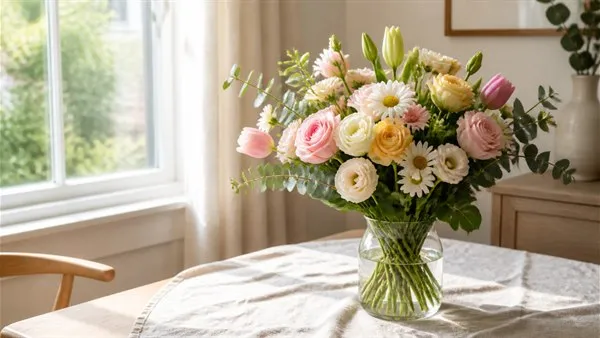
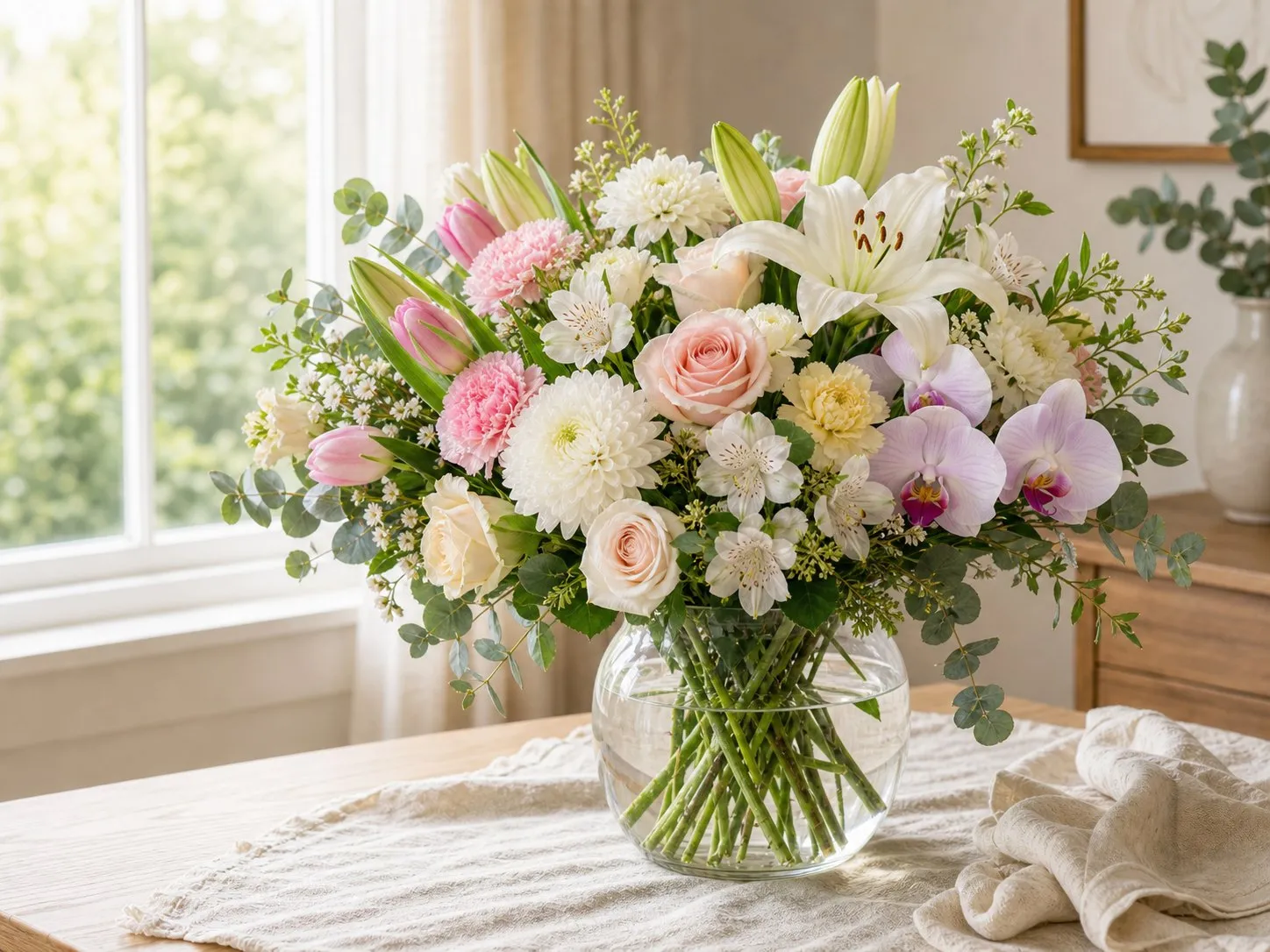
Step 1: Unwrap the Bouquet Immediately
A wrapped bouquet is in shipping mode, not display mode. The plastic sleeve traps humidity and ethylene from the flowers themselves, and the stems are usually cut flat (not at an angle) so they sit in a water cell during transport. Both are fine for an hour or two; neither is what you want long-term.
Unwrap fully. Pull off any rubber bands or cellophane around the stems. If the bouquet came with a water cell or wet paper, discard it.
Looking for the right words? Our card messages and wishes give you lines you can copy straight onto the card.

Step 2: Prepare a Clean Vase
This is the step everyone skips. A vase that looks clean is usually not. Bacterial biofilm from the last bouquet is still on the inside walls, invisible, and ready to infect the new water within hours.
Wash the vase with hot water and dish soap. If there is any film, scrub with a bottle brush. Rinse thoroughly. Fill with cool fresh water — not warm, not cold from the tap.
- Hot water + dish soap, scrub the inside
- Cool fresh water in the vase (about room temperature)
- Add flower food now, before the stems go in
Step 3: Recut Every Stem
Use sharp scissors or a knife. Cut about 2 cm off the bottom of each stem at a 45° angle. The angle is not aesthetic — it gives the stem more surface area to draw water through and keeps the cut edge off the bottom of the vase.
Strip any leaves that would sit below the waterline. Leaves in water rot fast and feed bacteria. For woody-stemmed flowers like hydrangeas and lilacs, split the bottom 2 cm of the stem with the back of a knife so they can drink. See the full care guide for stem-prep details by flower type.

Step 4: Arrange and Place
Place the stems in the vase one at a time, working from the tallest in the centre to the shorter or droopier stems around the edge. Resist the urge to over-arrange — most bouquets look best with a little natural spread.
Place the finished vase somewhere bright but out of direct sunlight, away from heating vents, radiators, and drafty windows. Keep it well away from the fruit bowl. In summer, near an air conditioner is fine. In winter, away from the heater is non-negotiable.
- Bright, indirect light
- Cool room temperature
- No direct sun, no radiator, no fruit nearby
- Stable surface — flowers do not like being moved daily
Step 5: Set a 2-Day Reminder
Every 2 days for the life of the bouquet: empty the vase, rinse it, refill with cool water, add fresh flower food, and recut each stem. The cycle is the single biggest factor in how long the bouquet lasts. Read the full care routine if you have not already.
Common Day-One Mistakes
A short list of mistakes that quietly cost you 3-5 days of vase life. None of them are obvious in the moment — they only show up later.
- Leaving the bouquet wrapped on the counter for "just a couple of hours"
- Reusing the previous bouquet's vase water (the bacteria carries over)
- Not recutting because the stems "look fine"
- Leaves left below the waterline
- Placing the vase on a sunny windowsill because it looks pretty there
- Adding hot water instead of cool
- Forgetting the flower food packet still in the wrapping
And when you are ready to send something, browse fresh flowers and add your note at checkout.