Why Hydrangeas Wilt So Fast
Most cut flowers drink only through their stems. Hydrangeas are different: those huge heads are made of dozens of small flowers, and they lose and absorb water through their petals too. That enormous surface area is why a hydrangea can look perfect at breakfast and be flopped over by dinner - it simply loses water faster than a single cut stem can replace it.
This sounds like bad news, but it is actually the key to keeping them happy. Because they take in water through the whole head, you can rehydrate a hydrangea directly - not just feed the stem and wait. That is the trick that turns hydrangeas from a diva flower into an easy one.
Looking for the right words? Our card messages and wishes give you lines you can copy straight onto the card.
Hydrangea Care at a Glance
The quick reference. Notice how much of it is about water contact - stems and petals both.
| Need | What to do |
|---|---|
| Water | Keep the vase full - hydrangeas drink a lot; refresh every 1-2 days |
| Trim | Cut 2-3 cm off on a slant; split the stem base for more uptake |
| Temperature | Cool room, out of direct sun and away from heat |
| If wilting | Soak the whole flower head in cool water for 30-60 minutes |
| Misting | A light mist of the petals helps - unusual, but hydrangeas like it |
| Vase | Wide enough to support the big, heavy heads |
Hydrangeas are the one common cut flower where misting the blooms genuinely helps, because they absorb that moisture. For most flowers misting does little; for hydrangeas it buys real time.
The Revival Trick That Actually Works
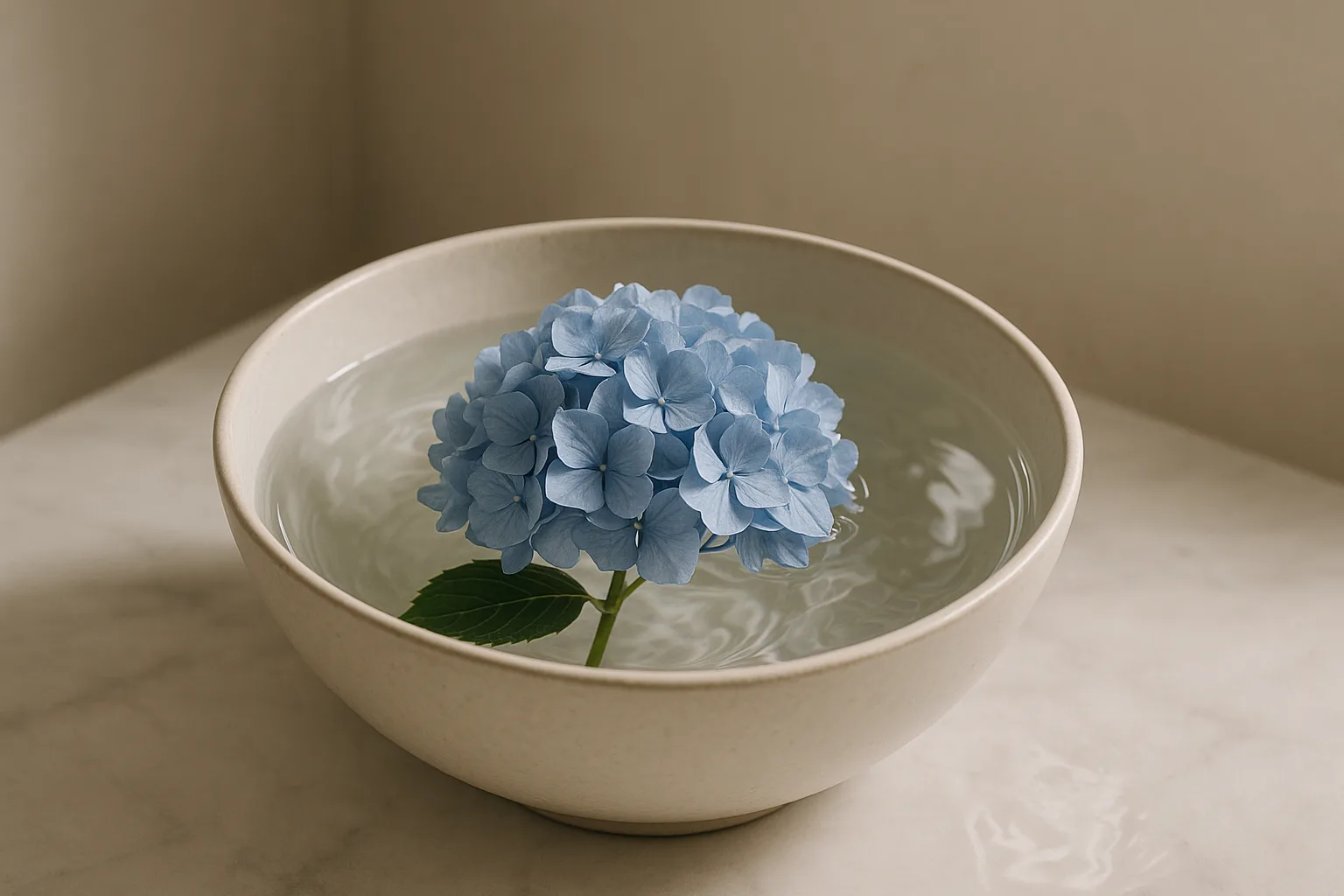
This is the one thing to remember about hydrangeas, because it feels like magic the first time you see it. A hydrangea that has completely wilted - head hanging, petals limp - can usually be brought fully back to life, and it takes under an hour.
Fill a sink or basin with cool water and submerge the entire flower head, blooms and all, leaving it under for 30 to 60 minutes. The petals drink directly and the whole head firms back up and stands tall again. Recut the stem end first so it can draw water too. I have revived hydrangeas that looked completely finished this way - it works far more often than it fails.
- Recut 2-3 cm off the stem on a sharp slant
- Submerge the whole flower head in cool water for 30-60 minutes
- Lift it out, shake off excess, and return it to a clean, full vase
- For stubborn stems, dip the freshly cut end in boiling water for 30 seconds first
- Keep it cool afterwards to hold the revival
The boiling-water dip sounds brutal but it clears the sap that can block a woody hydrangea stem, letting it drink properly again. Do it only on the very bottom of the stem, and keep the flower head well clear of the steam.
Cutting, Water and Placement
Hydrangea stems are woody and can seal themselves off, which stops them drinking - a big reason they wilt early. A fresh slanted cut, and a short vertical split up the base of the stem, opens up more surface for water to travel. Strip any leaves below the waterline, since hydrangea foliage sucks up a lot of the water the blooms need.
After that it is about volume and temperature. Keep the vase genuinely full, not half - these are thirsty flowers - and top it up daily. Keep them out of direct sun and away from radiators or vents. A cool spot with plenty of water is all a hydrangea really asks for.

Common Hydrangea Problems
Almost every hydrangea complaint comes back to water - either not enough getting in, or a stem that has sealed itself off. Here is the quick troubleshooting table.
| Problem | Likely cause | What to do |
|---|---|---|
| Whole head wilted | Lost water faster than the stem replaced it | Submerge the head in cool water for 30-60 min |
| Wilts again within a day | Woody stem sealed and cannot drink | Recut and dip stem end in boiling water 30 sec |
| Papery, drying petals | Natural ageing (hydrangeas dry beautifully) | Let it dry - it makes a lovely dried flower |
| Colour fading fast | Too much heat or direct sun | Move somewhere cooler and shaded |
One upside worth knowing: when a hydrangea reaches the end of its fresh life, do not bin it. Let it dry out in the vase and it turns into a papery, long-lasting dried flower that holds its shape for months.
My Take
Hydrangeas taught me that a wilting flower is not always a dying one. The first time I dunked a completely collapsed hydrangea head underwater and watched it stand back up an hour later, I stopped being intimidated by them for good. That one trick is the difference between calling them fussy and calling them easy.
So keep the vase full, keep them cool, split the woody stems, and when they flop - and they will - give the whole head a cool soak instead of giving up. Treated that way, hydrangeas are one of the most rewarding cut flowers there is: huge, generous blooms that you can rescue again and again, and that even dry into something beautiful at the end.
And when you are ready to send something, browse fresh flowers and add your note at checkout.