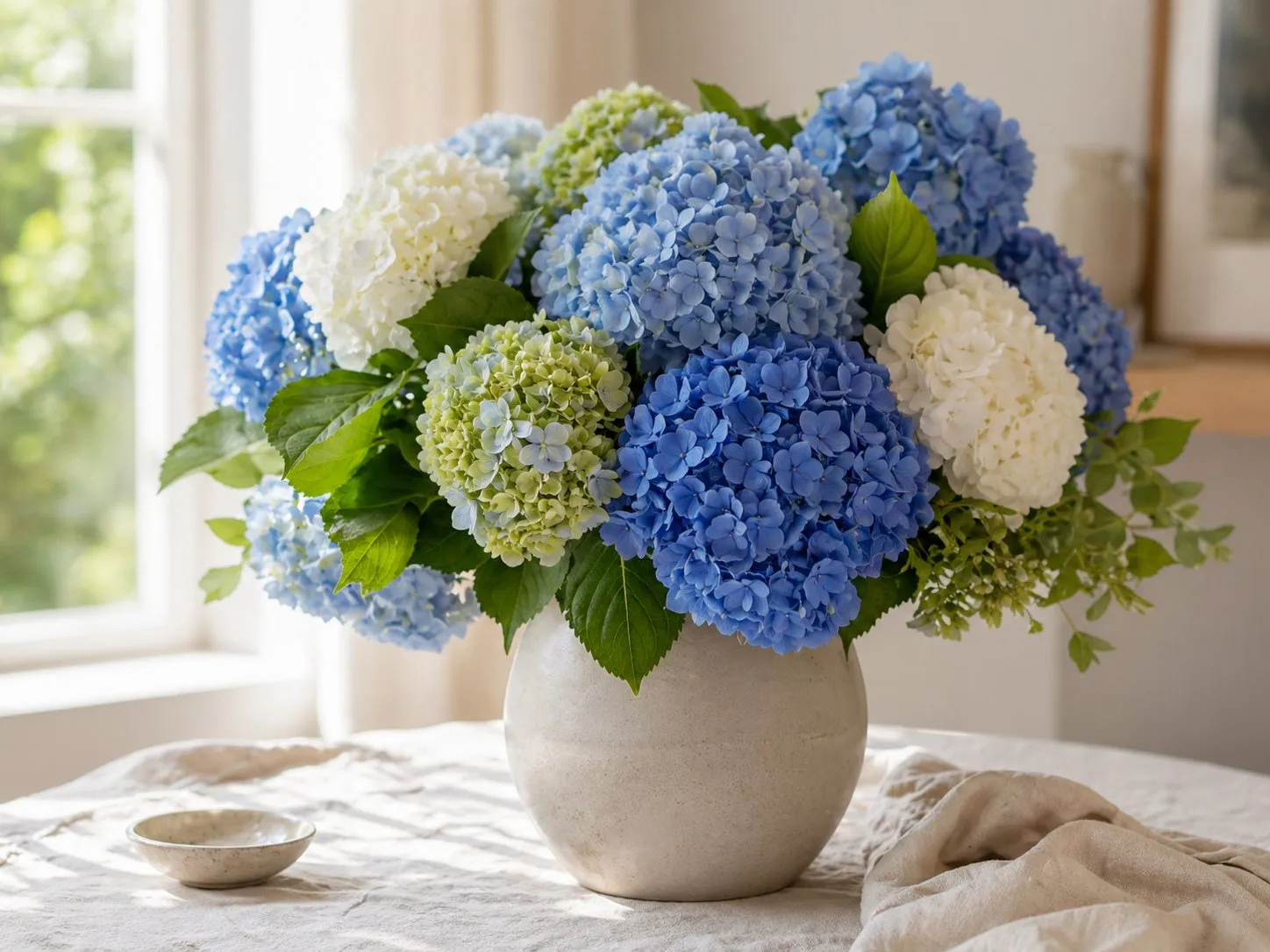
Why True Blue Flowers Are Rare
Plants struggle to produce true blue. The pigment most plants use for cool colours - anthocyanin - tilts toward red and purple in most chemical environments. Blue requires a very specific cellular acidity that few species can sustain.
This is why genuinely blue flowers are rare in nature. Most "blue" things in the floral world are actually deep purple, blue-violet, or white flowers dyed blue. Hydrangea is the famous exception, and even there, blue only develops when the soil is acidic enough to release aluminum.
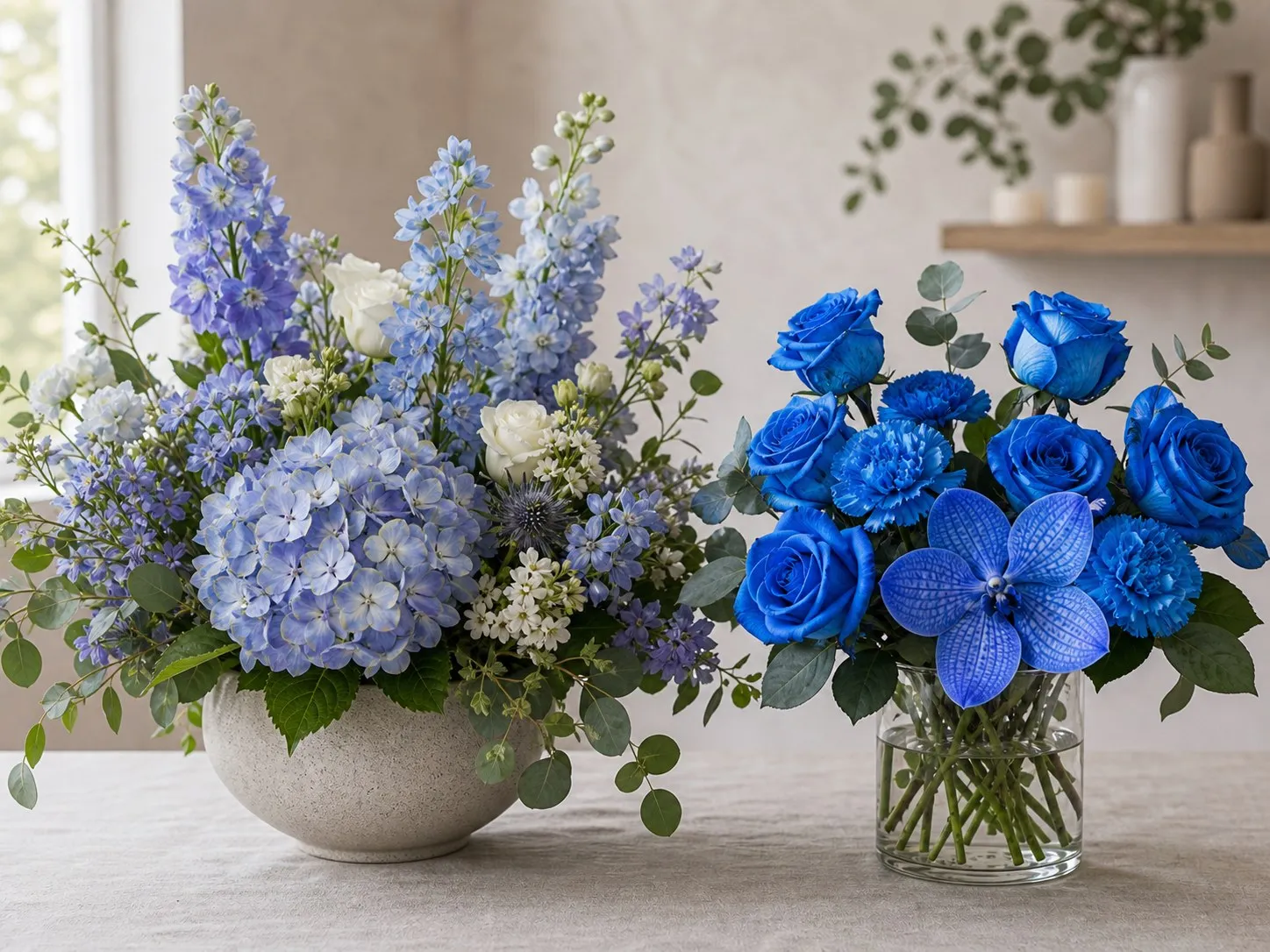
If specifying "blue" to a florist matters, ask whether they mean naturally blue varieties or dyed. The look is different - naturally blue tends to be softer and slightly violet; dyed tends to be more saturated and unnatural-looking.
Looking for the right words? Our card messages and wishes give you lines you can copy straight onto the card.

Top Naturally Blue Flowers
The flowers that consistently deliver real blue (not blue-purple), in roughly the order of how often florists carry them:
- Hydrangea - the most accessible blue; depends on soil acidity for true blue tone
- Delphinium - tall, spiky, true blue; classic English garden look
- Forget-me-not - small, pale blue, often grown as ground cover
- Bachelor button / cornflower - vivid blue; field-grown summer flower
- Morning glory - true blue varieties (Heavenly Blue); annual vine
- Iris (specific varieties) - deep blue iris exists in several cultivars
- Anemone - blue varieties have black centres against blue petals
- Muscari (grape hyacinth) - small purple-blue clusters; spring bulb
- Lobelia - small bright blue flowers; common garden annual
- Lupine - tall spikes of blue; summer wildflower
Of these, hydrangeas and delphinium are the easiest to find at florists in Canada. The rest are mostly garden flowers rather than commercial cut stems.
Dyed Blue Flowers: What to Know
A lot of "blue" flowers sold by florists are dyed. Specifically: blue roses, blue carnations, blue orchids, and blue daisies. The flowers themselves are white; the dye is absorbed through the stem in the supplier's warehouse.
Dyed blue flowers look striking but unnatural. The colour is more saturated than anything that grows in nature, which is part of the appeal for some buyers and part of the problem for others. If the recipient might find dyed flowers tacky, ask first.
Dyed flowers also tend to fade unevenly - the blue lightens as the flower ages, sometimes leaving streaks or odd patches. Vase life is similar to the undyed version.
What Blue Flowers Mean
Blue carries a specific set of meanings in the floral world, partly because the colour is so rare:
- Tranquility and calm - blue is the colour of stillness in flower symbolism
- Trust and dependability - corporate and professional gifting often uses blue
- Loyalty and lasting devotion - forget-me-nots especially
- Mystery and the unattainable - tied to the rarity of true blue
- Sympathy (in some contexts) - blue hydrangeas appear in funeral arrangements
Blue is not a romantic colour the way red is, and not as friendly as yellow. It is the colour for thoughtful, considered gestures - not first dates, not impulse gifts.
When Blue Flowers Work
Blue fits a specific set of moments:
- Weddings - "something blue" tradition; blue hydrangeas and delphinium are wedding regulars
- Anniversaries with long-standing partners - blue reads as enduring
- Baby boys (mixed with white, in soft baby blue tones) - traditional but optional
- Sympathy - blue hydrangea arrangements are increasingly common
- Corporate gifts - blue reads professional and calm
- Modern home decor - blue arrangements feel contemporary
Skip blue for: Valentine's Day (red is the standard), birthdays (warmer colours land better), get-well (cheerful yellow or pink fit better).
And when you are ready to send something, browse fresh flowers and add your note at checkout.