What Get-Well Flowers Are Really For
A get-well bouquet is not trying to fix anything. It is trying to do one thing: make the room feel less like a hospital room, or a sickroom, for a few days. That is it.
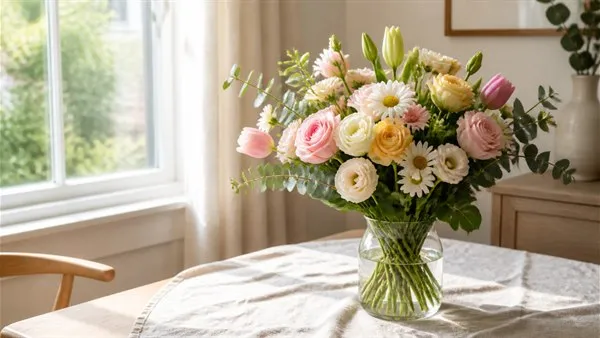
Which means the bouquet does not need to be big. A modest arrangement of fresh stems in good colour does more for a recovering person than a dramatic vase that takes over the side table and dies in five days because nobody is well enough to change the water.
Looking for the right words? Our get well soon messages give you lines you can copy straight onto the card.

Best Flowers for a Hospital Room
Hospital rooms are small, dry, brightly lit, and shared. The flowers that handle that environment best are sturdy, low-fragrance, and visually clean.
- Roses (pink, peach, yellow) - sturdy, no scent, long vase life
- Tulips - bright, simple, easy to look at
- Gerbera daisies - cheerful colour, no fragrance
- Chrysanthemums - very long-lasting, holds up in dry air
- Carnations - underrated, 10-14 day vase life, no scent
- Alstroemeria - small blooms, very long-lasting
- A small mixed seasonal bouquet without lilies or strong-scent stems
Stick to small to medium arrangements. The side table or window ledge in a hospital room is not big. A 20-stem arrangement that needs a large vase often gets put on the floor or in the bathroom.
What to Avoid
A few things that are genuinely bad ideas for a get-well bouquet, especially for hospital delivery:
- Lilies - strong fragrance, pollen stains, can trigger nausea in someone already feeling rough
- Stargazer and Oriental lilies - same issue, even worse
- Freesia, hyacinth, paperwhites - heavy scent in a closed room
- All-white arrangements - read as sympathy, not get-well
- Pollen-heavy flowers near anyone immunocompromised
- Anything in a glass vase for a small child or someone with mobility issues
- Floor-standing arrangements - they get in the way of nurses and equipment
When in doubt, send something pink, yellow, or peach in a modest vase or basket. That is almost always safe.
Toronto Hospital Rules (Important)
Most Toronto hospitals allow flowers in general wards but ban them in specific units. The standard restricted units are:
- ICU and CCU (intensive care) - usually no flowers
- Oncology - varies by hospital, often no fresh flowers due to pollen and bacteria risk
- Transplant units - no fresh flowers, no plants
- NICU (neonatal intensive care) - no flowers
- Some maternity wards - allowed in private rooms, restricted in shared rooms
Before sending, ask a family member or call the unit reception. A florist in Toronto can also usually tell you which units at Sunnybrook, Mount Sinai, Toronto General, SickKids, Trillium, William Osler, and Humber are flower-friendly - they deliver there constantly.
If the unit does not allow flowers, do not skip the gesture - just switch the format. An indoor plant in a sealed pot is allowed in many units that ban cut flowers (check first). A gift basket of snacks, tea, or comfort items is always allowed. A note delivered alone is also a real option.

When to Send a Plant or Basket Instead
Sometimes the better gift is not a bouquet at all. A few scenarios where a plant or basket beats cut flowers:
- Long recovery - a plant outlasts any bouquet by months
- Restricted ward - many units allow potted plants but not cut flowers
- Recipient hates fuss - a peace lily or orchid sits quietly, no water changes
- Someone with allergies - a non-flowering houseplant is safer
- Sending to a man who has said he does not love flowers - a plant reads different
- Group gift from an office - a larger plant divides the cost more naturally
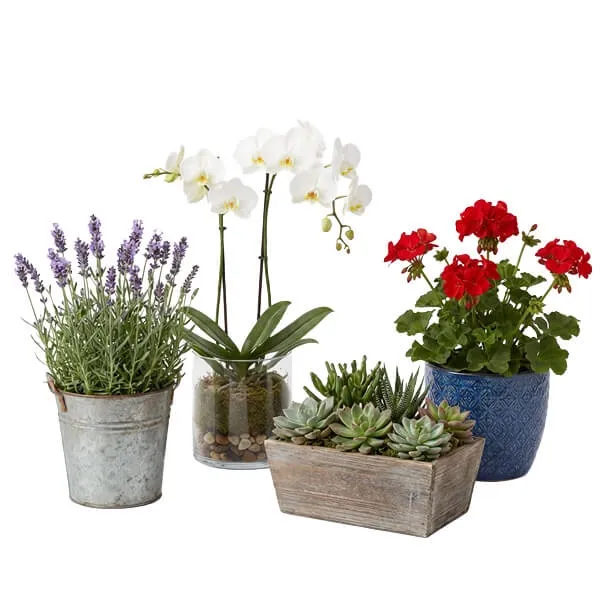
Orchids, peace lilies, anthuriums, and small succulents are the standards. They look like a gift, they require almost no care, and they keep showing up for weeks after the bouquet would have ended up in the green bin.
What to Write on the Card
Get-well cards are tricky because most of the standard phrases sound either too breezy or too heavy. A few that consistently land well:
- "Thinking of you. Take it easy."
- "No reply needed. Just sending some colour to the room."
- "Get well when you are ready. We are not going anywhere."
- "This is small, but I wanted you to know I was thinking of you today."
- "Hope this brightens the room a little. Rest up."
- "Sending warmth your way. Call me when you feel up to it."
Skip "fight it" or "you got this" for serious illness - it can land as pressure instead of encouragement. Keep it short. The flowers are the message; the card is the signature.
And when you are ready to send something, browse get-well flowers and add your note at checkout.