Why White Lilies Feel Different from Other White Flowers
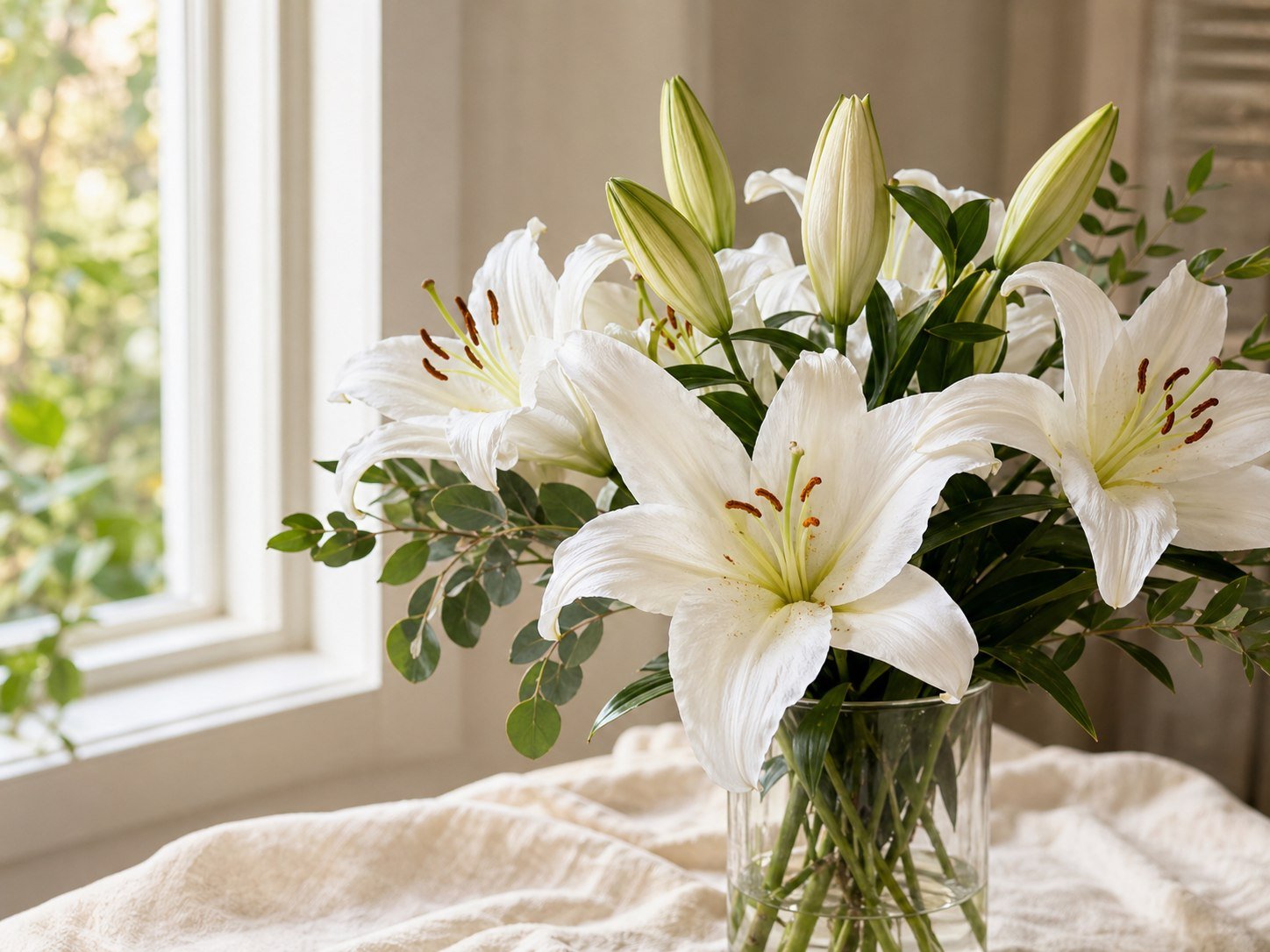
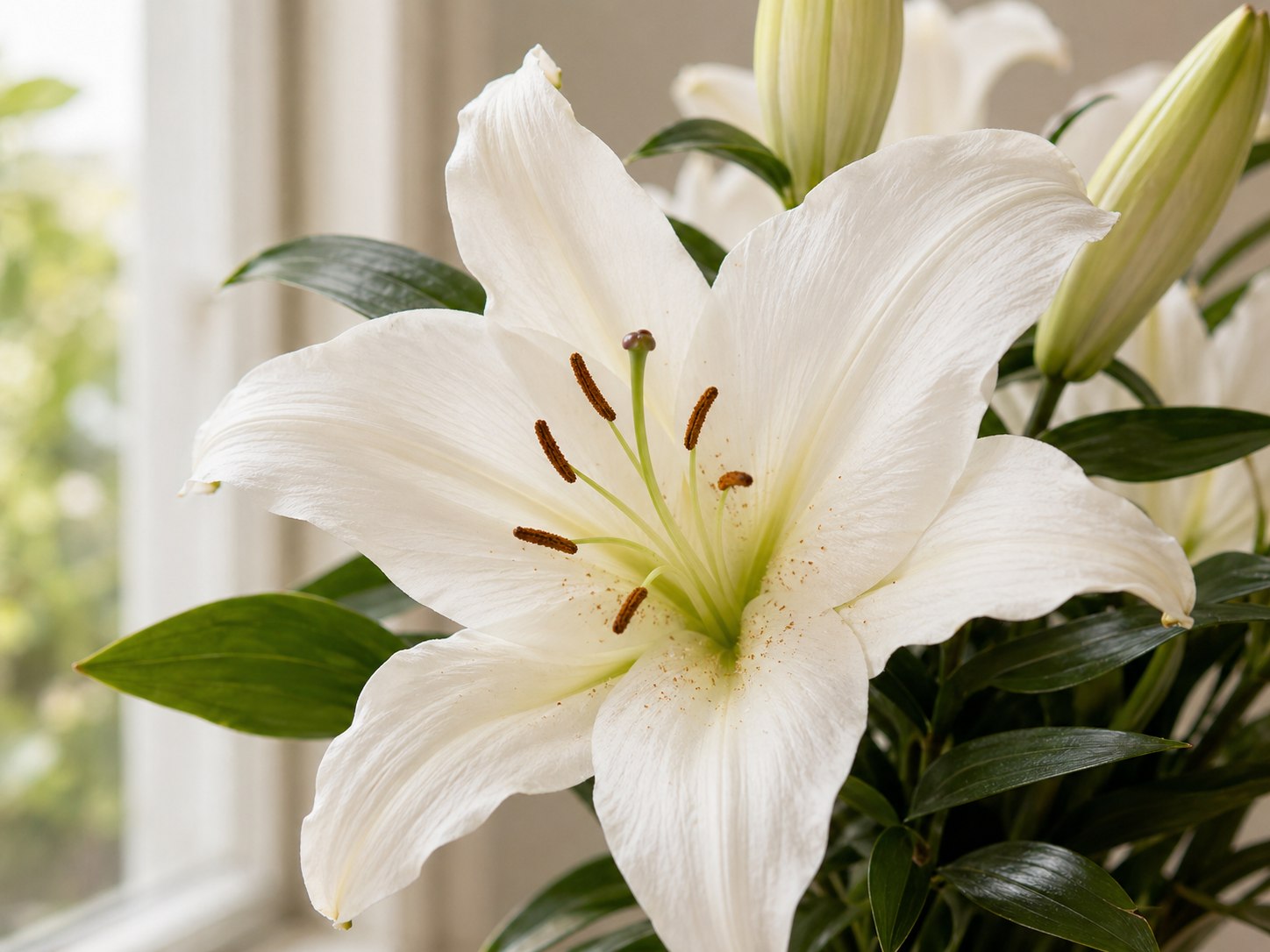
Most white flowers get filed under the same handful of words. Pure, clean, elegant, sometimes pretty. That works fine for things like baby’s breath or sweetheart roses. It does not really cover white lilies. There is more going on with them. The scent, for one (subtle to outright fragrant depending on cultivar). The shape, with those long stamens like little antennae and petals that curl back at the tip without flopping. And the room thing, which I always have a hard time describing. White lilies sit in a space the way a lit candle does. You feel them even when your back is turned.
Photographs miss this almost completely. Lilies in pictures tend to look stiff, slightly bridal, slightly funeral-home. Stand a few stems in a glass jar with messy eucalyptus or a sprig of ruscus and the stiffness just goes away. You stop seeing a Symbol of Something and start seeing flowers that someone actually chose and brought home on a Wednesday.
It is a strange flower that way. Looks classical, behaves much more casually than you would guess once it is in a real room.
What White Lilies Usually Symbolize
Standard meanings list: purity, sincerity, sympathy, renewal, peace, refined beauty. The list is long because the flower has been part of our visual culture for a very long time. Madonna lilies appear in European Annunciation paintings from the 1400s onward, where they consistently stood for virginity, purity, and divinity. Modern viewers do not usually know that history consciously, but we still read the flower as ceremonial. The reading is inherited.
They are not just funeral flowers, though, and writing them off as solemn is a mistake I made for years. The bouquet I picked for my wife’s birthday last year had Casa Blanca lilies, three cream garden roses, and a few stems of stock. The lilies were the part she kept commenting on. As thank-you flowers they read more sincere than the kind of bright mix you would grab at a grocery store. As romantic flowers they are less obvious than red roses, but if a relationship has actual years on it, less obvious is sometimes the right call.
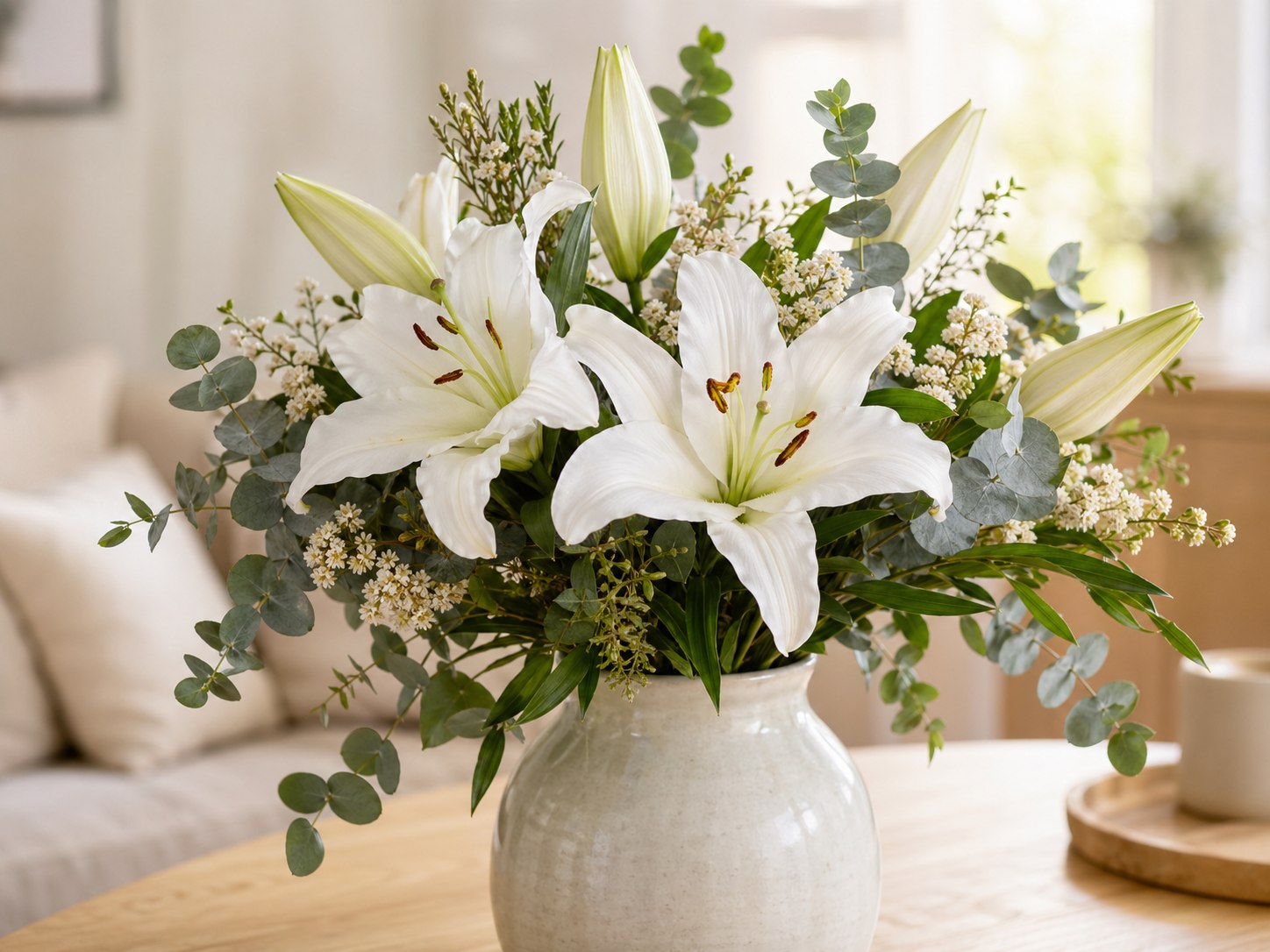
What shifts the meaning isn’t really the flower; it’s the company it keeps. Tight all-white compote? Formal. White lilies thrown loose with eucalyptus and a bit of trailing greenery? Domestic and warm. White lilies plus blush garden roses? Romantic without anyone announcing it.
- Purity, sincerity, honesty
- Sympathy, peace, emotional steadiness
- Renewal — fresh starts, new chapters, second chances
- Refined elegance (the kind that doesn’t need to flex)
When White Lilies Are a Good Choice
Honest answer: not for every bouquet. White lilies can be too elegant for a goofy birthday gift, and they’re a strange choice for, say, a college kid’s first apartment-warming. Narrow the brief to “this needs to feel sincere,” though, and they jump to the front of the line.
A few situations where I default to white lilies almost without thinking. Sympathy work, obviously. Big anniversary bouquets, especially past the ten-year mark when the relationship has earned something quieter than a dozen red roses. Birthday flowers for the friends whose apartments are more minimal than maximalist. The apology bouquet, where I think roses sometimes overshoot the moment. And hosting gifts. I would genuinely rather walk in with three Casa Blanca stems wrapped in brown paper than anything I could grab at a grocery store, even if the grocery bouquet has triple the stem count.
Practical bit, in case you were going to order: the flower delivery hub is the obvious first stop. If the flowers are part of a wider gift (cake, balloons, a card you actually wrote out), the gift delivery hub stays in the same register and gives you more to work with.
My Honest Take on White Lilies in Bouquets
One thing I learned the slow way is to give them room. White lilies do not bouquet well when crowded; the heads get muddy, the stems lose shape, the whole thing fights itself for space. The arrangement I keep coming back to is three or maybe five strong Oriental stems (Casa Blanca if the florist has them, bigger blooms with a bit more fragrance), enough greenery to give the bouquet structure, and a vase that does not try to compete with the flowers. That setup ends up looking more expensive and landing more emotionally than the 30-stem mixed arrangements I used to send a decade ago.
The other thing white lilies do, that almost no other flower does well, is carry silence. Sounds vague, I know. What I mean: some bouquets are supposed to bounce into a room and make the recipient laugh. Others are meant to sit on a kitchen counter and just be present, the way a good friend who doesn’t need to fill the air is present. White lilies do that second job exceptionally well.
One real caveat — scent. Oriental varieties (Stargazer, Casa Blanca, Sorbonne) are strongly fragrant. Asiatic lilies barely smell. LA hybrids land in the middle. If the recipient is in a small Toronto condo, gets migraines, has cats (worth flagging — lilies are seriously toxic to cats, and any responsible florist will route around the issue), or just isn’t a fan of perfumed flowers, ask before you order. Thirty seconds of messaging saves a lot of awkwardness.
White Lilies, Sympathy, and Softer Emotional Moments
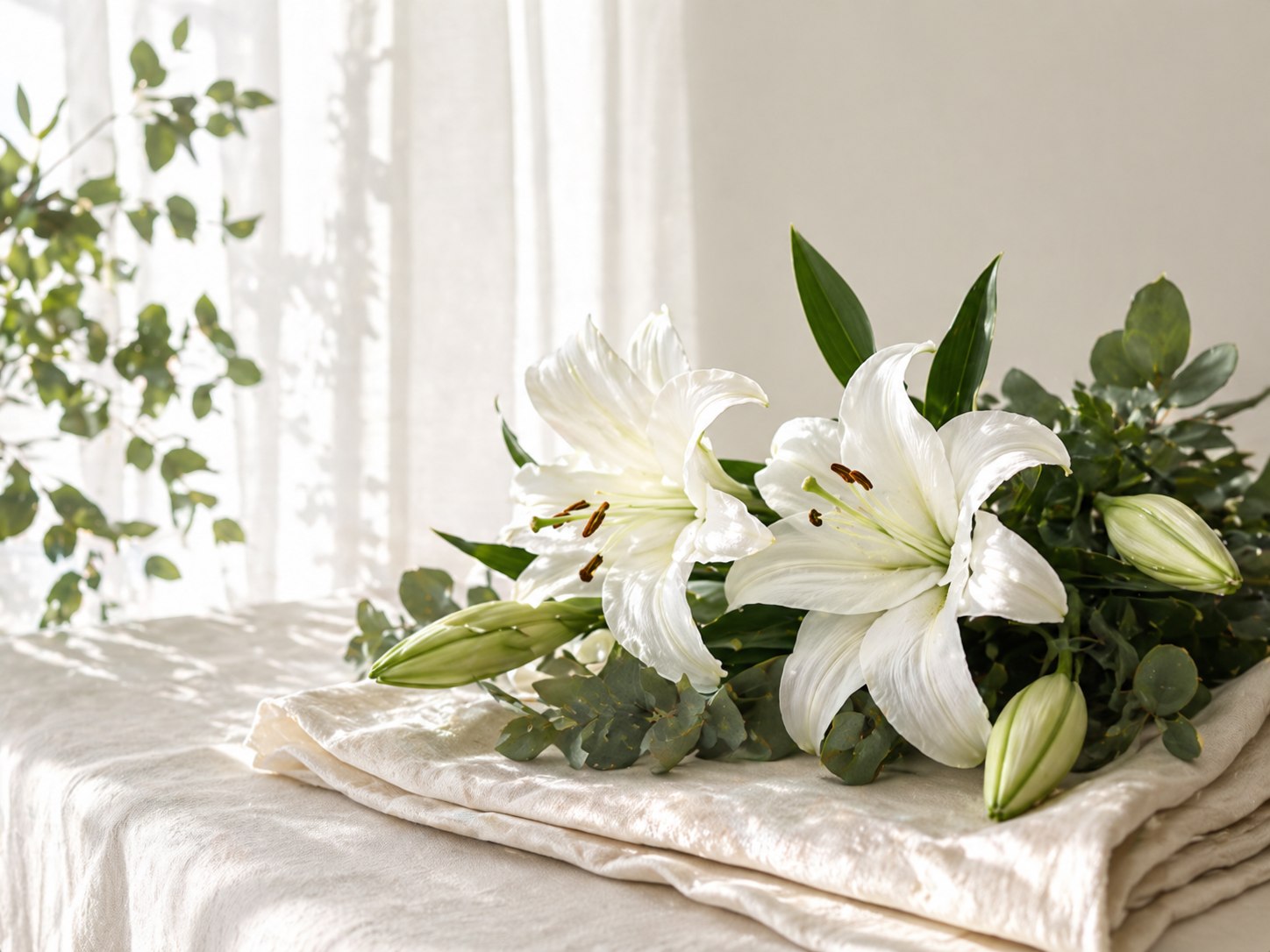
There is a practical reason white lilies show up so often in sympathy arrangements, beyond simple tradition. Bright bouquets at a memorial can land oddly. The intent is kind but the visual register fights the room. Yellows and pinks packed in tight, too many colors at once, and the flowers start working against the feeling rather than with it. White lilies sit alongside grief without arguing with it. They are not trying to brighten anyone’s day.
Boxing white lilies in as grief flowers misses what they actually do, though. The honest thread is closer to emotional steadiness than to sorrow. Respect, care, renewal, peace, sincerity all live under one roof there, and the occasion decides which one ends up on top. At a funeral the roof feels like sympathy. After a divorce or a job change, the same flowers land as a fresh start. In a quiet anniversary bouquet they read as the kind of love that has stopped trying to perform.
One flower doing very different jobs, and all of those jobs are quiet.
How to Choose a White Lily Arrangement
Palette is what I check first when I am choosing a white lily arrangement. White and green by itself is the quietest, most ceremonial option. Cream, blush, champagne, or a hint of pale pink in the mix warms everything up immediately and pushes the bouquet more romantic. Beyond the colors, design matters too. A leaner florist style with fewer types of flowers and asymmetric lines fits a minimal condo better, while a fuller, traditionally packed arrangement reads more at home in a layered, lived-in room.
Bud-to-bloom ratio matters more than people expect. Fully open lilies look spectacular in the photo, but they are already past peak; you might get two days of show before they start dropping petals. Buds are the insurance policy. They keep opening for the better part of a week. A bouquet that is roughly half-and-half, open flowers next to tight buds, will outlast a fully blown one by days, and that gap matters most when the flowers have to ship or sit on a counter for a while before whoever they are for actually gets home.
It is also worth knowing the actual variety the florist is using, and asking is fine. Casa Blanca and Sorbonne are the larger and more romantic Oriental cultivars. Stargazer is technically pink-and-white but reads white-adjacent in many bouquets, and the scent is intense. Asiatic whites are smaller and neater, with almost no fragrance, which makes them the safer pick for an office, a clinic, or anyone who is not a fan of perfume in the air.
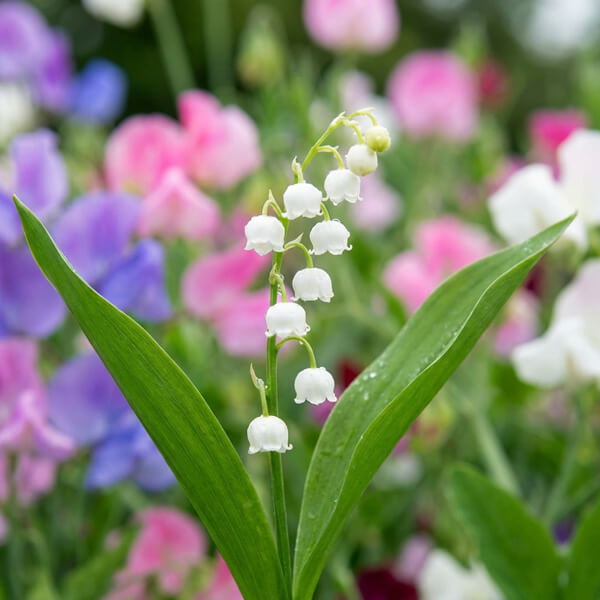
Comparing meanings before you settle on a flower? The flower meanings hub has the rest of them. And if you want something gentler in the same family, lily of the valley is the small, quieter cousin to read about next.
Why White Lilies Stay Meaningful
Most flowers have one register they do well. White lilies are unusual in that they manage formal and emotional at the same time, which most flowers cannot really pull off. Formal flowers tend to read empty; emotional flowers tend to read messy. Lilies hold a room without asking the room to look at them, and that combination is rarer than it sounds.
Whenever a gift actually needs to carry weight, I end up choosing them. Not a wow-factor bouquet, not something cute, not flowers chosen for the camera. Just real consideration on the part of whoever sent them.
If you boil down white lily symbolism to a single word, it isn’t purity. It isn’t sympathy either. It is something closer to composure. A flower that does not seem to need an audience.