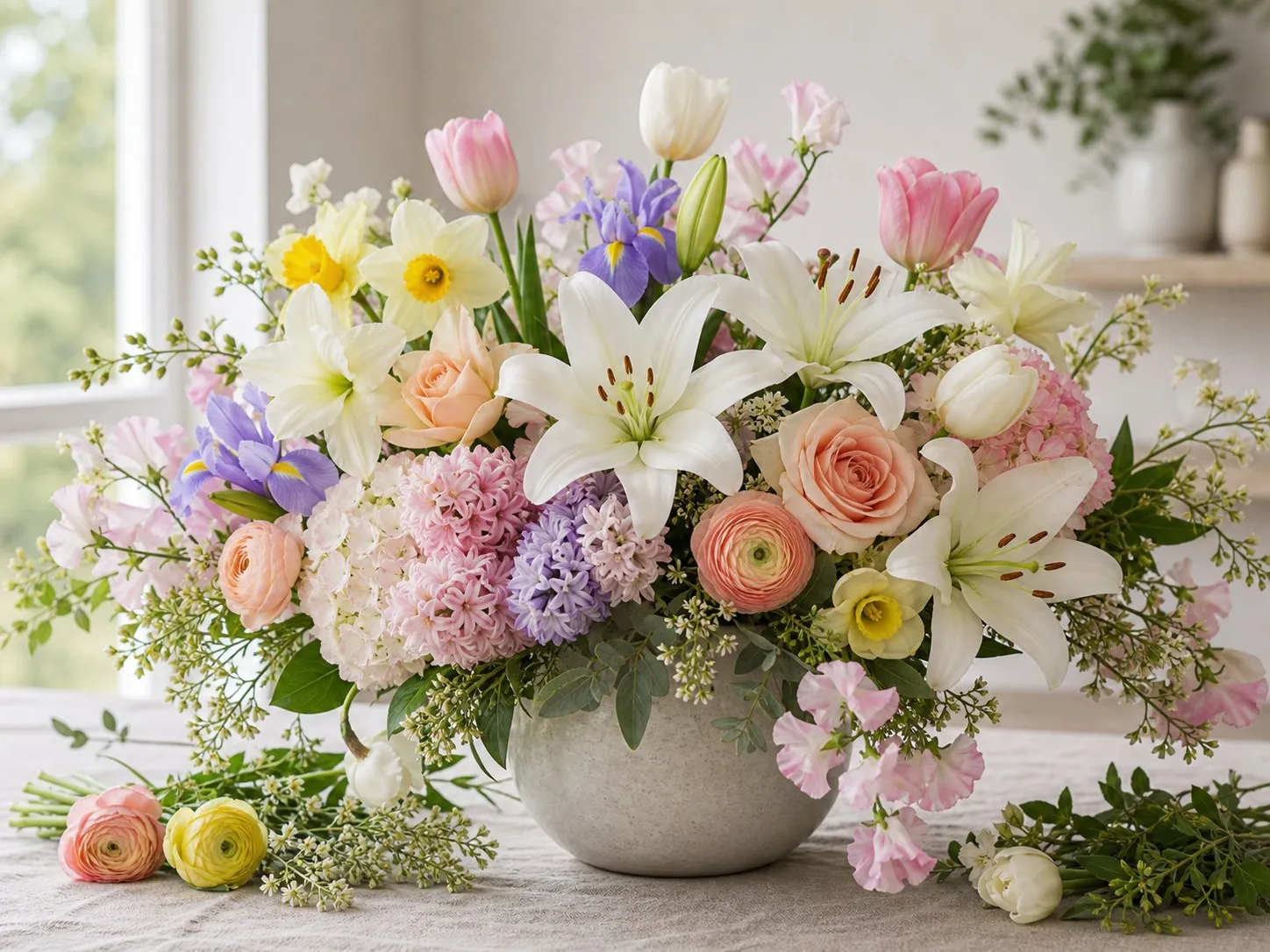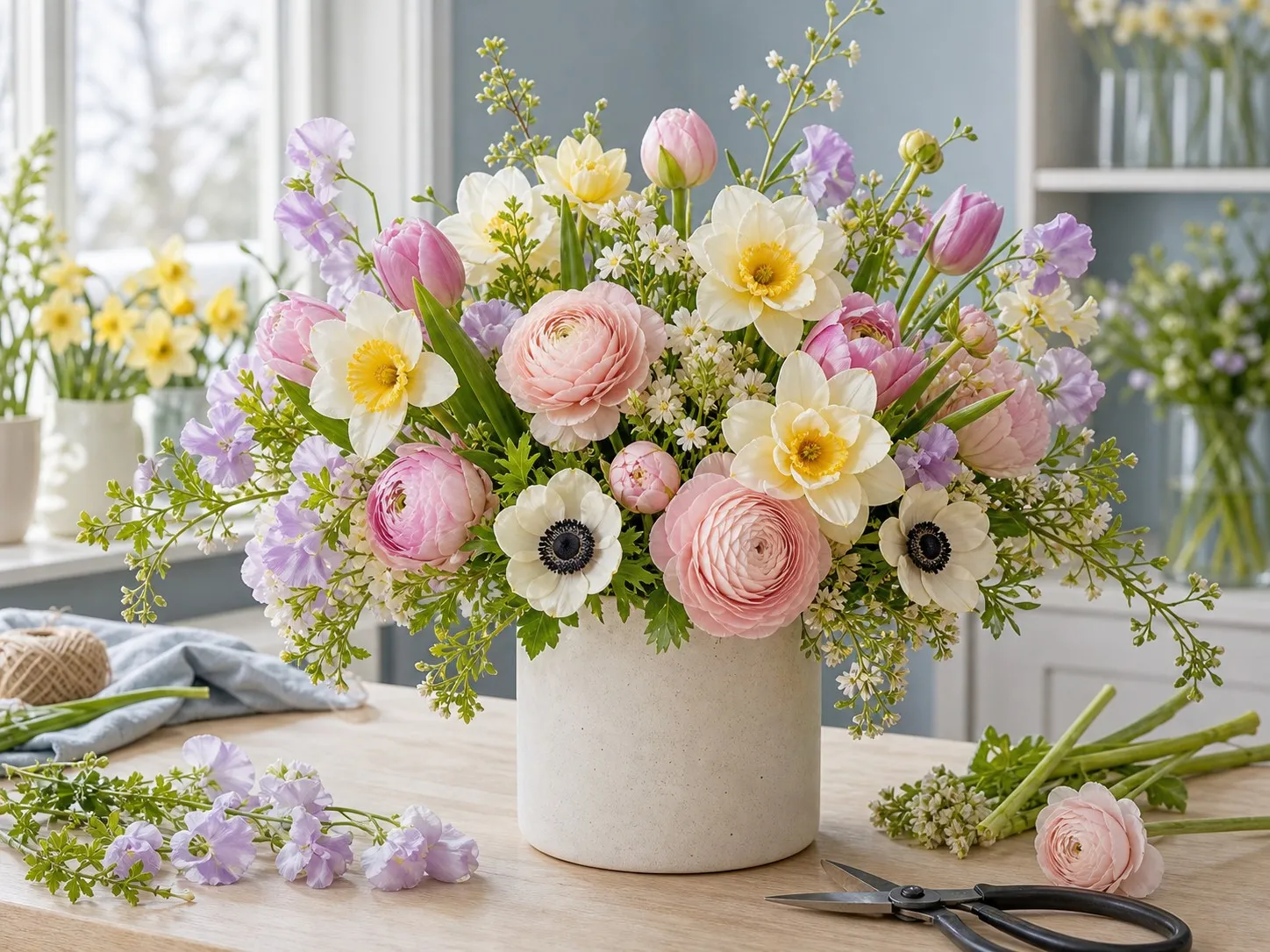
What Makes a Flower a "Spring Flower"
A spring flower is one that naturally blooms between roughly mid-March and late May. In Canada that is the window when greenhouses, Dutch growers, and South American shippers all hit their stride at once.
The look that defines spring is specific. Lighter colour, cleaner stems, simpler shapes. After a long winter of dark reds and evergreens, anything pale and fresh feels like it belongs.
Spring flowers also tend to be shorter-lasting than summer or fall varieties. Tulips give you 5-7 days. Peonies, 5-7 if they were tight on arrival. That short window is part of why they feel like a moment instead of a permanent fixture.
Looking for the right words? Our card messages and wishes give you lines you can copy straight onto the card.
Top 10 Spring Flowers
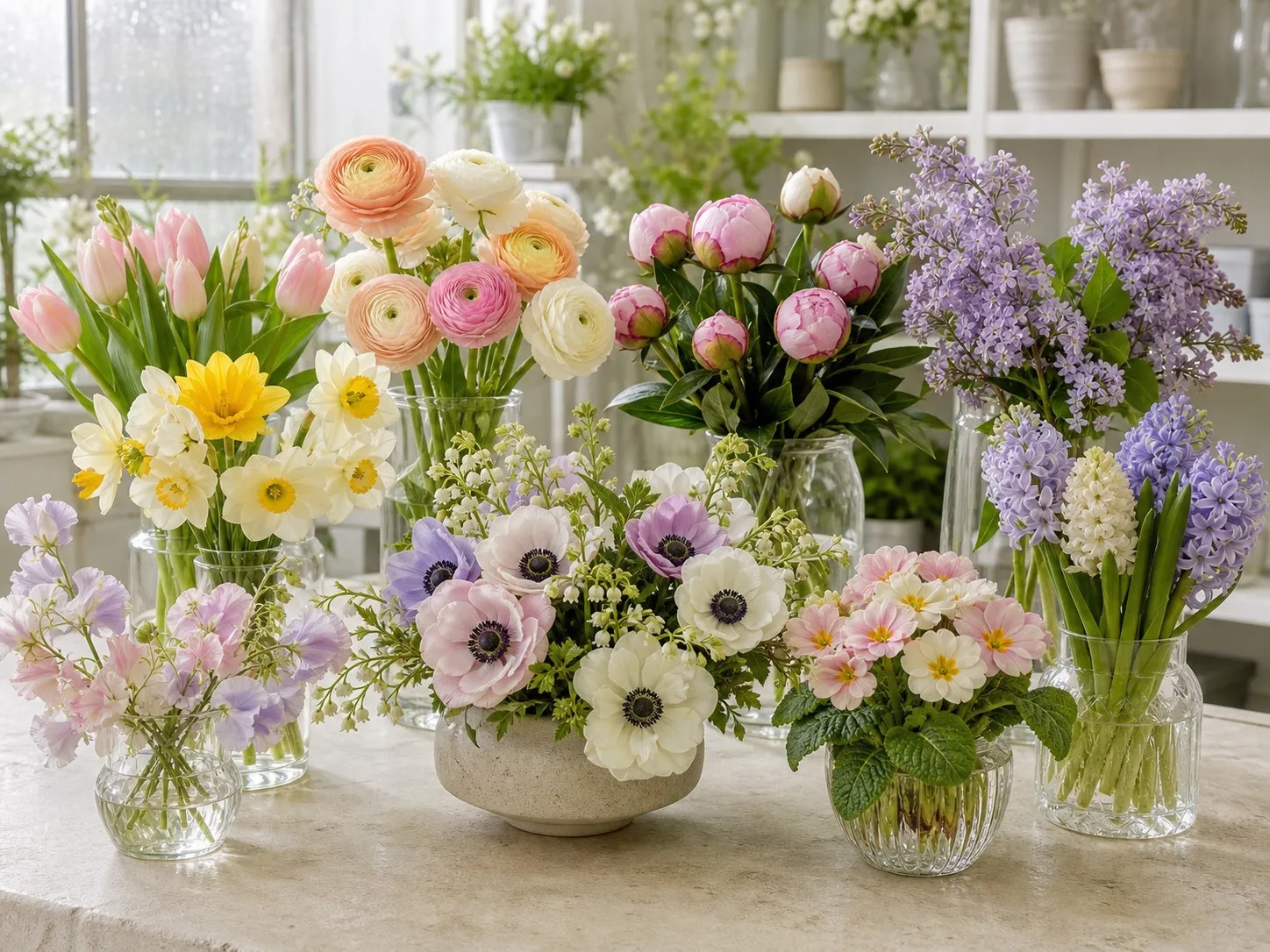
The flowers that consistently lead spring stock in Canada, in roughly the order most people reach for them:
- Tulips - the spring default, available March through May, every colour
- Daffodils - bright yellow, cheerful, the March birth flower
- Ranunculus - layered and pretty, often peach, blush, or cream
- Peonies - tight window (late May into June), worth the wait
- Lily of the valley - small, delicate, deeply fragrant, the May birth flower
- Hyacinth - heavy fragrance, dense flower spikes, pastel range
- Anemone - black centre with white, blue, or red petals; very modern look
- Primrose - low, soft, often grown as a potted plant
- Lilac - briefly in season (mid-May), purple and heavily fragrant
- Sweet pea - delicate, fragrant, the April birth flower alongside daisies
If the recipient is hard to pin down on flower preferences, a mixed spring bouquet built around tulips and ranunculus is almost always the right answer. It looks intentional, it lasts a week, and it feels seasonal without trying.
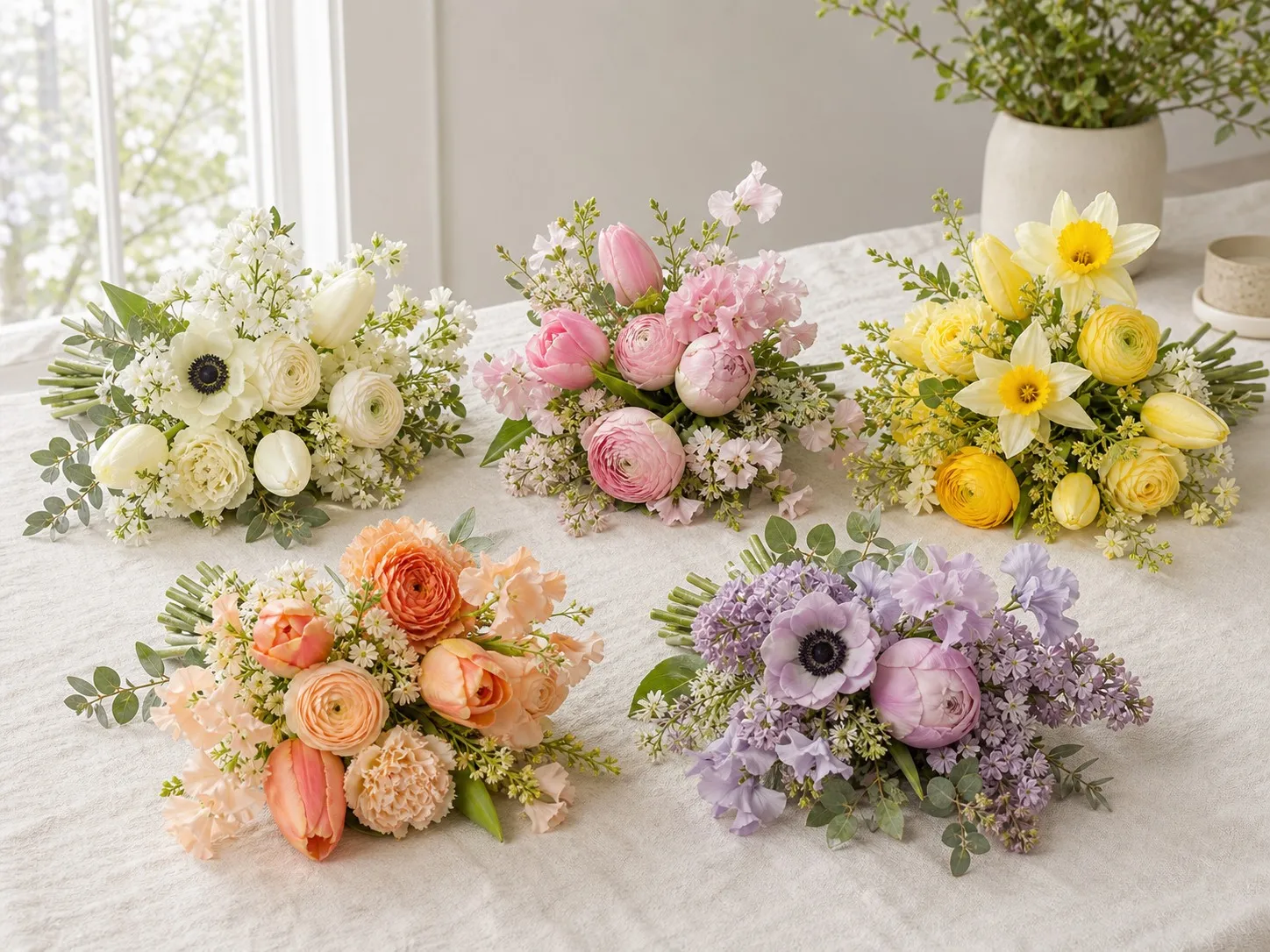
Spring Flower Colours That Actually Work
Spring has a colour vocabulary, and bouquets that follow it tend to land softer than the same flowers in stronger tones.
- Cream and white - clean, modern, fits any occasion
- Blush and pale pink - the most universally appreciated spring tone
- Soft yellow and butter - warm without being aggressive
- Peach and apricot - reads as considered rather than generic
- Pale lavender and lilac - subtle, slightly more grown-up
What to be careful with in spring: hot red, deep burgundy, bright orange. They are not wrong, but they pull the bouquet toward Valentine or autumn and away from the spring feeling people are usually after.
Easter, Mother's Day, and Spring Birthdays
Spring is when the gifting calendar gets dense. Easter (varies, late March to mid-April), Mother's Day (second Sunday of May), Victoria Day weekend, plus a long run of spring birthdays. Florists in Toronto and the GTA are at their busiest from mid-April through May.
For Easter, lilies are the traditional pick - white Easter lilies specifically. Tulips and daffodils also fit. For Mother's Day, the standard is roses or a mixed pastel bouquet; peonies are the upgrade if she likes them. For a spring birthday, the birth-flower angle works well: daffodils for March, daisies or sweet pea for April, lily of the valley for May.
Practical note for Mother's Day: order at least 3-4 days in advance for the GTA. Same-day is possible but stock is often tight and the best arrangements go early.
How to Care for Spring Flowers at Home
Spring stems are more sensitive than summer or fall ones. Tulips keep growing in the vase (so the arrangement changes shape after day two). Peonies do not love heat. Hyacinth stems are hollow and prone to bending.
The basics still apply: re-cut the stems at an angle, use the flower food packet, change the water every two days, keep the vase out of direct sun and away from heating vents. Spring flowers in a Canadian apartment in March are dealing with very dry air - getting them away from the radiator buys you an extra day or two.
Tulips specifically: do not over-water. They will drink fast and droop if the vase is too full. Two thirds of the vase is enough.
And when you are ready to send something, browse fresh flowers and add your note at checkout.