
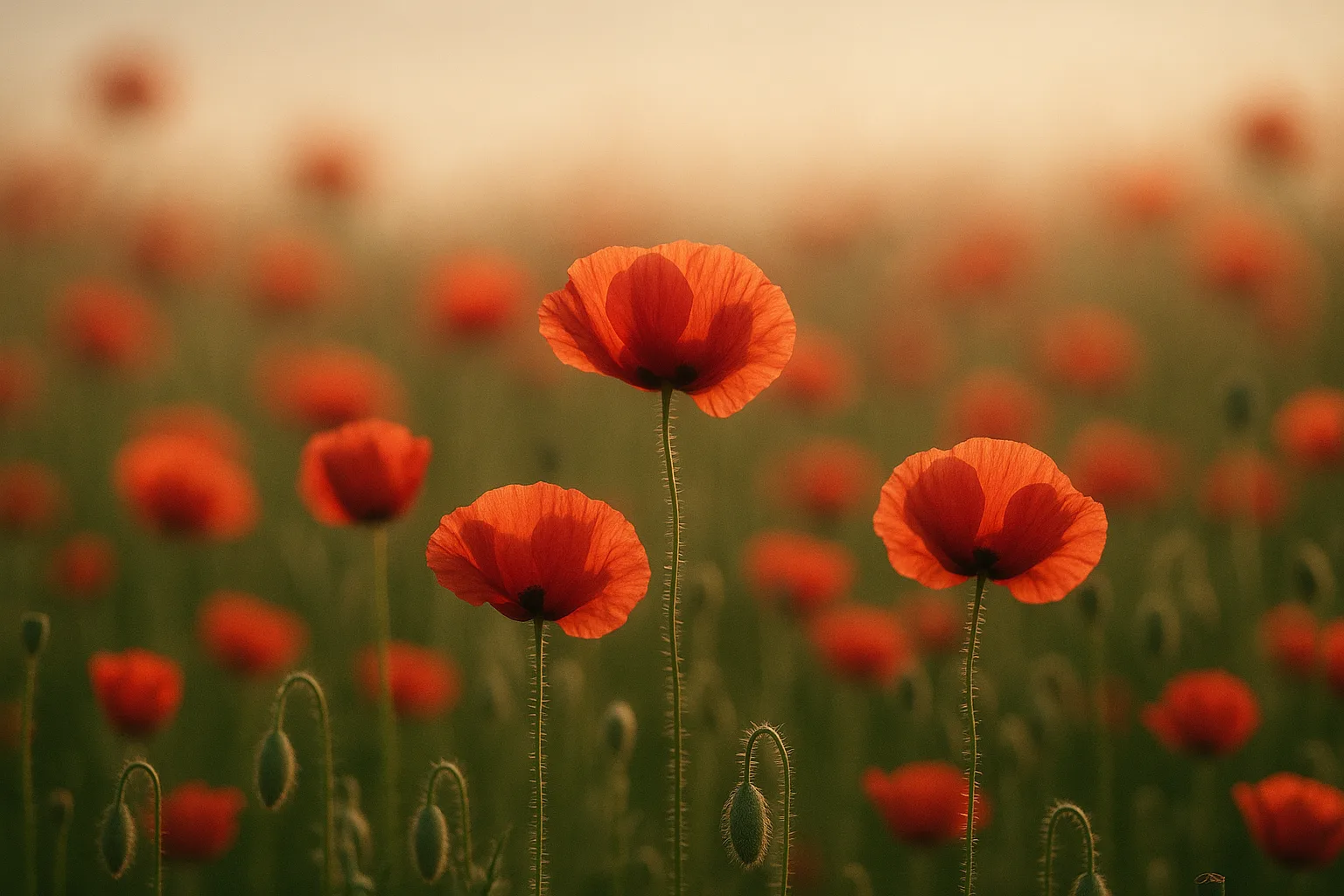
Why the Poppy?
The red poppy became the flower of remembrance because of a poem - and a Canadian one at that. In 1915, Lieutenant Colonel John McCrae, a physician from Guelph, Ontario, wrote 'In Flanders Fields' after the funeral of a friend on the Western Front. Its opening image - poppies blowing between the rows of crosses - fixed the flower in the world's memory forever.
The poppies were real. The churned, shelled soil of the Flanders battlefields was exactly the disturbed ground that wild red poppies colonise, and they bloomed across the graves and craters in astonishing numbers. That a fragile, blood-red flower could rise from such devastation made it the perfect, unbearable symbol of lives lost - and it has been ever since.
Looking for the right words? Our card messages and wishes give you lines you can copy straight onto the card.
The Poppy and How to Wear It
In Canada, the lapel poppy distributed by the Royal Canadian Legion is worn in the lead-up to November 11 to honour those who served and died. It is a small act with a lot of meaning, and there are a few gentle points of etiquette worth knowing.
| Question | The convention |
|---|---|
| When to wear it | From the last Friday of October until November 11 |
| Which side | On the left lapel, over the heart |
| After the day | Removed on November 11, often left at a memorial or cenotaph |
| Donation | Poppies are given for a donation to support veterans |
Many people place their poppy on the cenotaph or a wreath at the end of the Remembrance Day ceremony - a quiet, moving gesture that returns the flower to the memorial. There is no single hard rule, but wearing it over the heart, and treating it with respect, is what matters.

Flowers in Wreaths and Tributes
The wreaths laid at cenotaphs on Remembrance Day are rich with meaning. The poppy is central, but tribute wreaths and arrangements traditionally weave in several other flowers and foliage, each carrying its own note of respect.
- Red poppies - remembrance and the lives lost
- Laurel - honour, victory and eternal glory, an ancient symbol of tribute
- Red and white flowers - respect, reverence and, in Canada, the national colours
- Chrysanthemums and roses - common in respectful tribute arrangements
- Evergreen foliage - endurance and eternal memory
A tribute wreath is really a small language of flowers, built to say honour, memory and respect without a word. If you are laying or sending one, a florist experienced with tribute work will understand the tone - dignified, restrained and traditional rather than bright or celebratory.
Marking the Day With Flowers
Beyond the ceremony, there are quiet, personal ways to mark Remembrance Day with flowers. Placing a small arrangement or a single poppy at the grave or memorial of someone who served is a simple, powerful act. So is a dignified arrangement at home as a point of reflection during the two minutes of silence.
If you are remembering a specific person - a veteran in the family, someone lost in service - flowers become a way to hold their memory gently on the day. Keep it restrained and respectful in tone: reds and whites, poppies if you can find them, nothing loud. The point is remembrance, not display.

Sending Tribute Flowers
If you want to send flowers for Remembrance Day - to a veterans' organisation, a family remembering someone, or a memorial - choose a florist who does tribute and sympathy work, and be clear about the occasion so the tone is right. Dignified reds and whites, poppies where available, and traditional forms are the way to go.
Order a few days ahead of November 11, particularly for a wreath or a larger tribute piece, since these take time to make well. Include a short, respectful message. In Toronto and across the GTA, local florists can prepare and deliver tribute arrangements that strike the right solemn note for the day.
My Take
Remembrance Day is the one day of the year built entirely around a single flower, and it is worth pausing on how remarkable that is - a small red poppy standing in for an ocean of loss, all because a Canadian doctor put what he saw into fourteen lines of verse.
You do not need to do anything elaborate to mark it with flowers. Wear the poppy over your heart, place one at a memorial if you can, and keep any arrangement dignified and restrained. The whole meaning of the day is in that quiet, deliberate act of remembering - the flower just gives it a form.
And when you are ready to send something, browse fresh flowers and add your note at checkout.


