
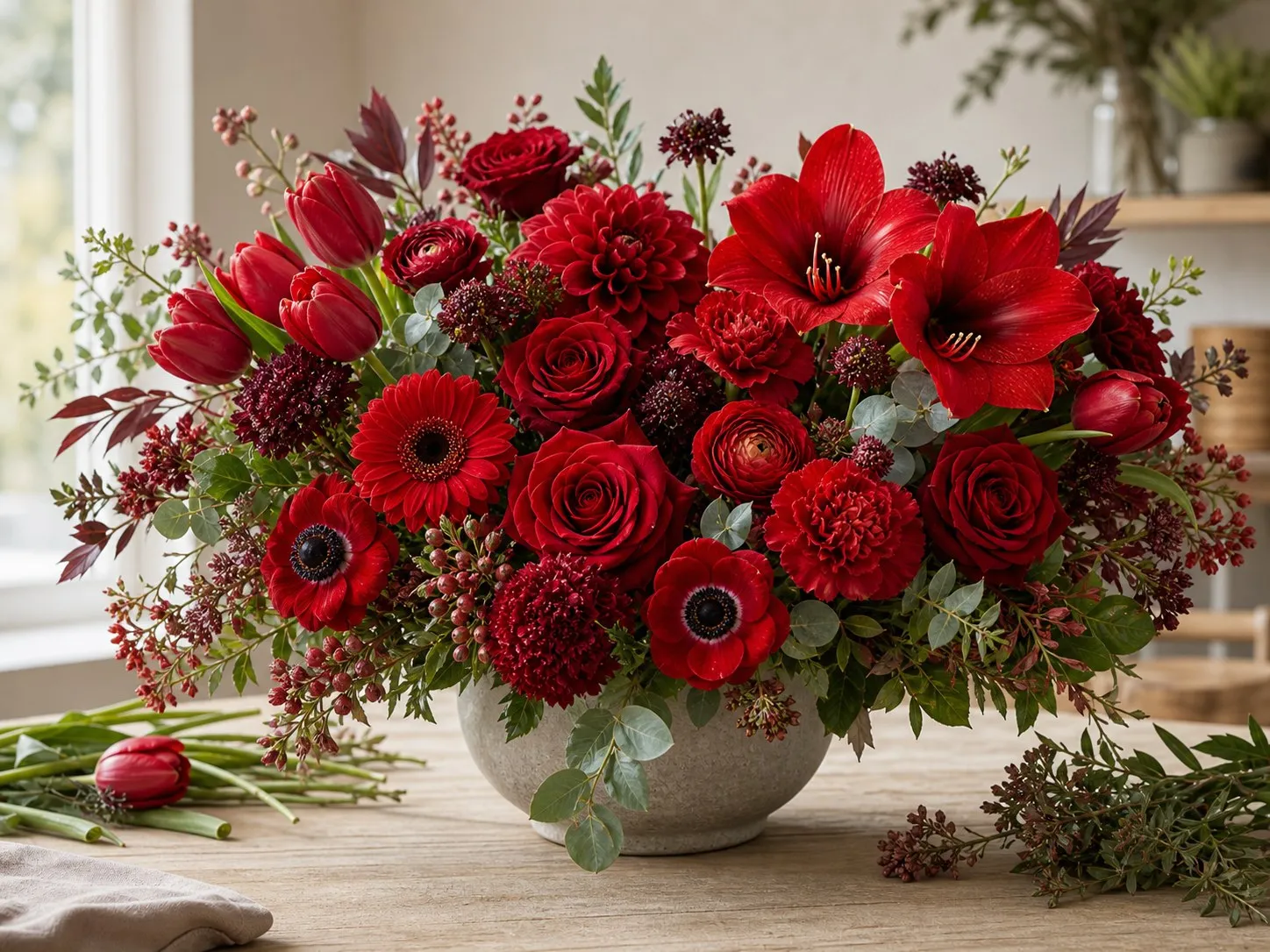
What Red Flowers Mean
Red is the colour with the strongest meaning in the flower world, and it is almost universally understood. Romantic love, passion, deep respect, sacrifice. It is the colour people reach for when the gesture needs to be unmistakable.
There is no real ambiguity with red flowers - which is both their strength and their limitation. A red bouquet sent to a coworker reads as overly romantic. The same bouquet sent to a partner reads exactly right.
The shade matters more than people realize. True red leans clean and classic. Burgundy or wine red leans formal and slightly mysterious. Orange-red leans warm and energetic. Florists usually carry all three, and the right one depends on the message.
Looking for the right words? Our card messages and wishes give you lines you can copy straight onto the card.
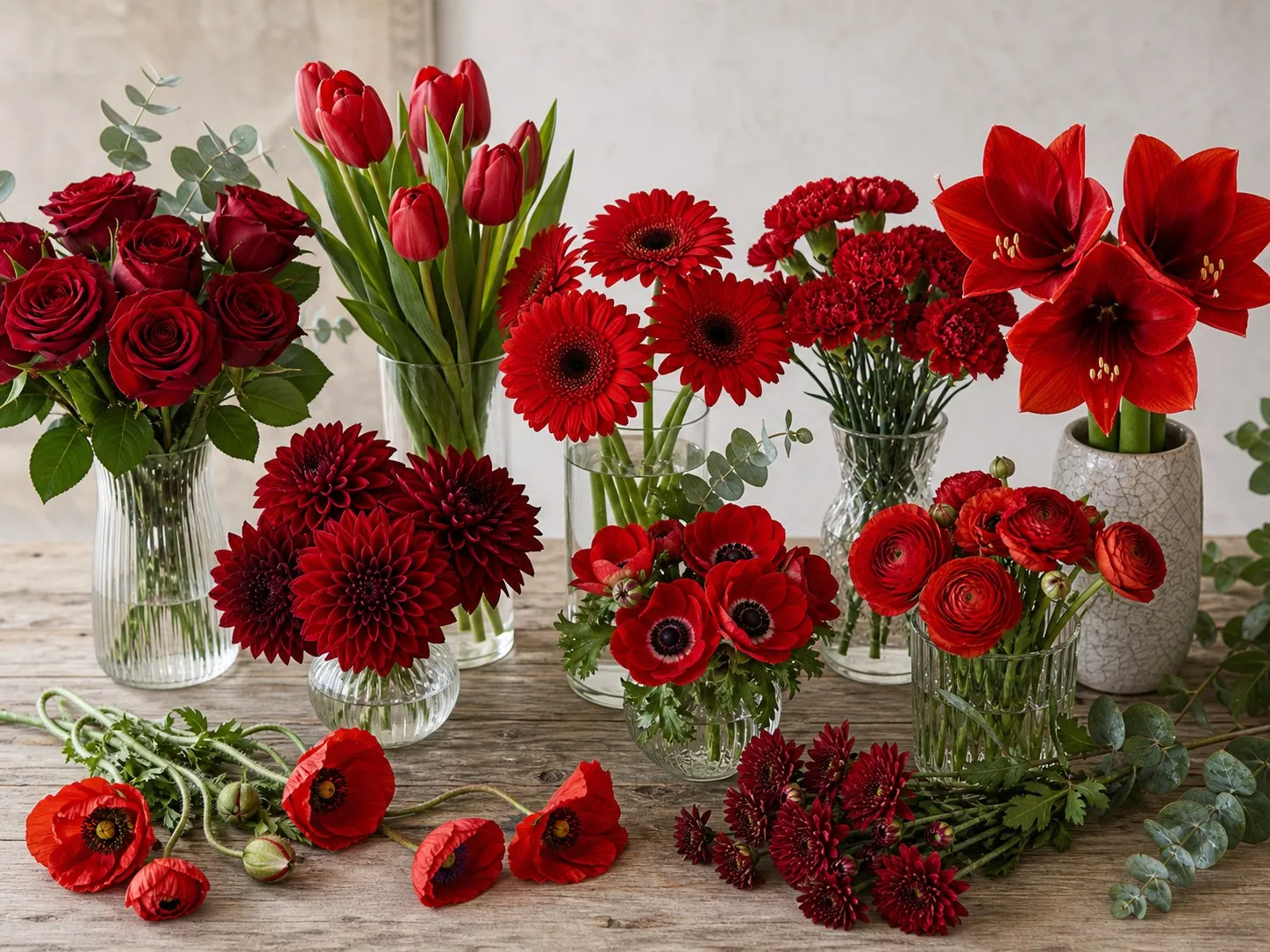
Top Red Flowers
The flowers that consistently work in red, in roughly the order people request them:
- Red roses - the classic and the volume leader; true red, burgundy, or coral
- Red tulips - cleaner and more modern than roses; spring season
- Red gerbera daisies - bold and cheerful; not romantic, but eye-catching
- Red carnations - underrated; deep wine colours look very put-together
- Red dahlias - dramatic and layered; late summer through fall
- Red anemones - black centre against red petals; striking, modern look
- Red ranunculus - layered like roses, slightly more delicate
- Red amaryllis - winter bloomer; tall and architectural
- Red poppies - field-style, soft red; brief season
- Red chrysanthemums - long-lasting; fall colour palette
If the bouquet is meant to be romantic, lean rose. If it is meant to be visually striking without the romantic message, lean gerbera, anemone, or amaryllis instead.
When Red Flowers Work
Red is occasion-specific. It is brilliant for some moments and wrong for others.
- Valentine's Day - the default; almost any other colour reads as a soft choice
- Wedding anniversaries - especially classic for 1st, 25th, 50th
- Engagements and proposals - red is the standard
- Date nights and surprises - works year-round
- Apologies and reconciliations - red carries weight; a single red rose or a small bunch lands harder than a mixed bouquet
- New relationships - usually too much; pink or peach is safer until things are clear
Skip red for: get-well flowers (reads too intense for a sick room), sympathy and funeral arrangements (white is standard), baby showers, office and coworker gifts.
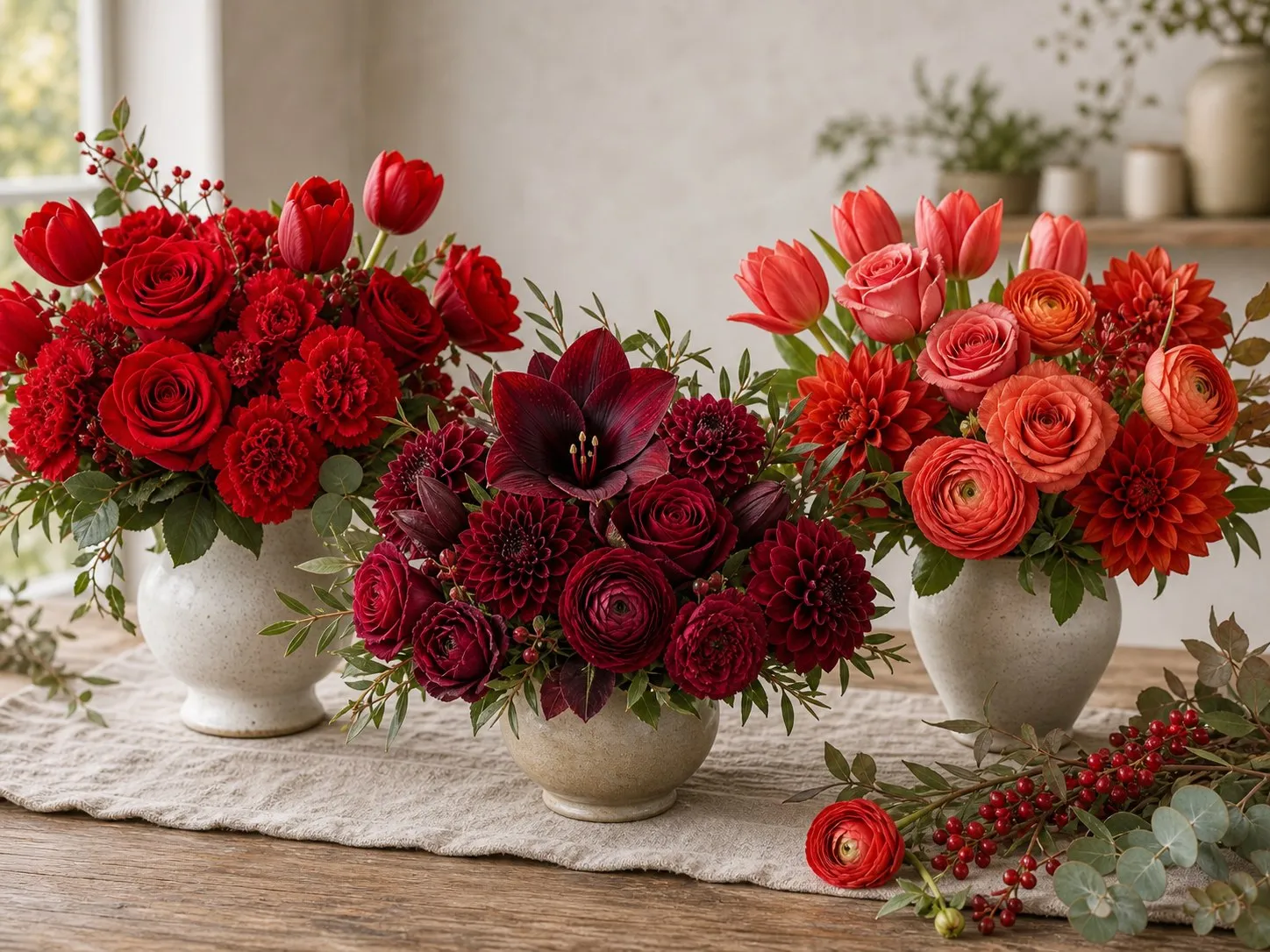
Red by Shade
The three main shades of red used by florists each send a different message:
- True red (fire engine red) - classic, romantic, the Valentine default
- Burgundy / wine - formal, considered, slightly grown-up; great for fall and winter
- Coral / orange-red - warm, energetic, less heavy; works for summer and birthdays
- Deep crimson / blood red - dramatic, almost gothic; very modern bouquets
If you are not sure which shade to specify, ask the florist for "classic red" - they will read it as Valentine red and build accordingly. For something more interesting, ask for "burgundy or deep wine reds" - the bouquet will feel more curated.
How Many Red Flowers to Send
Red roses have the strongest stem-count tradition. The rough language:
- 1 rose - love at first sight or a small daily gesture
- 3 roses - I love you
- 6 roses - I miss you
- 12 roses - the romantic standard
- 24 roses - milestone romance or stronger statement
- 50 or 100 roses - 25th/50th anniversary, reconciliation, or a deliberate big gesture
For other red flowers - dahlias, tulips, mixed red bouquets - stem count is less meaningful. A generous handful is the right answer.
And when you are ready to send something, browse fresh flowers and add your note at checkout.


