

Do Flowers Actually Work as an Apology?
Yes - but not on their own. Flowers do not fix anything by themselves. What they do is open the door: they show you put thought and effort in before the conversation, and they give the other person something warm to soften a cold moment.
The reason they work as an apology specifically is that they are a small act of humility. You went out of your way, you spent a little, and you did it without expecting anything back. That signal is the whole point - it is not about the flowers being expensive, it is about them being deliberate.
The mistake is treating the bouquet as the apology. It is the opening line, not the whole speech. Flowers plus a genuine 'I'm sorry, and here's what I'll do differently' works. Flowers alone, hoping they do the talking, usually does not.
Looking for the right words? Our card messages and wishes give you lines you can copy straight onto the card.

The Best Flowers to Say Sorry (Short List)
If you want a short answer, this is it. The flowers that consistently read as a sincere apology, without tipping into over-the-top:
- White roses - sincerity, a fresh start, respect; the safest apology flower
- White tulips - literally associated with forgiveness
- Pink roses - gentleness and appreciation, softer than red
- Lisianthus - understated and elegant, says thoughtful rather than showy
- Orchids - refined and personal, good when the relationship matters a lot
- A soft mixed bouquet in whites, blush and cream from a local florist
If you remember one thing: an apology bouquet should look gentle, not triumphant. A tasteful bunch of white or blush flowers says 'I've been thinking about this' far better than a dramatic two-dozen red roses, which can read as trying to sweep the whole thing away.

What the Colours Say
Colour does a lot of the talking with an apology, so it is worth being deliberate:
- White - sincerity, humility, a clean slate; the classic apology colour
- Blush and light pink - gentleness, warmth, admiration without pressure
- Peach - gratitude and sincerity, a soft and modern choice
- Lavender / soft purple - grace and thoughtfulness
- Deep red - use with care; it reads as passion or romance, which can feel like the wrong focus for an apology
For most apologies, stay in the soft end of the spectrum - whites, blush, cream, peach. Save bold red for when the relationship is clearly romantic and the apology is minor; otherwise it can look like you are trying to change the subject to love instead of owning the mistake.
How Many, and How Big?
Bigger is not more sorry. An enormous arrangement can actually backfire - it looks like a performance, or like you are trying to buy your way out. Right-sized and clearly chosen beats large and generic every time.
A tasteful bouquet in the $60-90 range, delivered on time, lands better than a $200 showpiece that arrives late. If you are sending roses, a dozen is plenty for most apologies; half a dozen well-chosen stems can be even better because it looks considered rather than grand.
The exception is a serious apology in a close relationship, where scaling up a little is fair - but keep it elegant, not loud. The goal is 'I care about this', not 'look how much I spent'.
What to Write on the Card
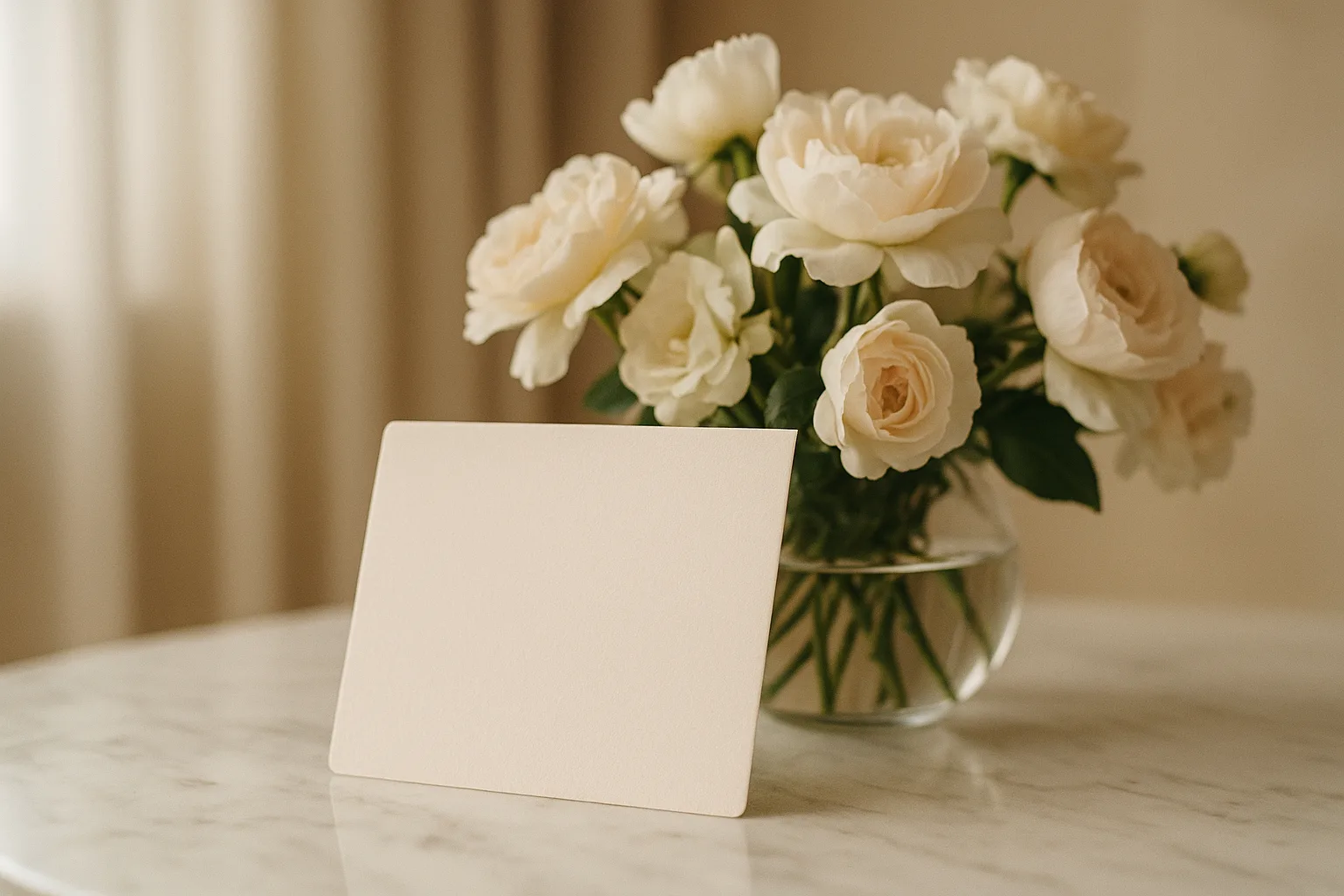
This is the part people get stuck on, and it matters more than the flowers. A few honest lines beat a long paragraph of excuses. Keep it short, own it, and do not bury the apology in explanation.
- "I'm sorry. I know I let you down, and I'm going to do better." - simple and direct
- "No excuses - I was wrong. Thank you for being patient with me."
- "I've been thinking about it, and I owe you a proper apology. These are a small start."
- "I'm sorry for what I said. It wasn't fair to you, and I know it."
Avoid the word 'but'. The moment an apology has a 'but' in it, it stops being an apology and becomes a defence. Say the sorry cleanly, and save any explanation for the actual conversation - the card is not the place to make your case.
What to Avoid
A few things that tend to work against an apology, even with good intent:
- All-white funeral-style arrangements - context matters; keep it clearly a bouquet, not a wreath
- Giant dramatic red-rose displays for a serious apology - reads as grand gesture, not humility
- Yellow-only bouquets - yellow leans towards friendship and cheer, which can feel like you are dodging the seriousness
- A card full of excuses or a "but" - it undoes the gesture
- Grocery-store flowers wrapped in cellophane - the wrong signal for a moment that is meant to show effort
- Late delivery - an apology that arrives two days later has already lost most of its point
Also skip the over-engineered arrangement stuffed with a dozen different flowers. For an apology especially, a clean bunch of one or two soft varieties reads as sincere; a busy mixed display reads as whatever was on the shelf.
Timing and Delivery
With an apology, speed is part of the message. The sooner it arrives, the more it says you did not sit on it. A same-day bouquet the afternoon of a mistake carries far more weight than a bigger one that shows up two days later.
In Toronto and across the GTA, ordering before noon usually secures same-day delivery. If it is already late in the day, many local florists still offer next-morning delivery - which beats waiting. Include the card message when you order so the whole gesture arrives together.
One practical tip: if you are apologizing to someone at work or somewhere you are not sure about, sending to their home in the evening is often safer and more personal than a delivery that lands on a busy office desk.
Flowers Are the Start, Not the Fix
The best apology flowers in the world do not replace the conversation - they set it up. Send the bouquet, say the words, and then follow through on whatever you promised. That is what actually repairs things.
Treated that way, flowers are a genuinely good tool: they show effort, they soften the moment, and they say you cared enough to act before being asked. Pick something soft and sincere, write an honest card, get it there quickly, and let the flowers do their small, real job.
And when you are ready to send something, browse fresh flowers and add your note at checkout.


